Case Study — National Trust Waterways
The River Wey & River Mole — Making a Waterway the Venue
Responsible access, participant education and commercially viable paddleboarding across Surrey waterways — from early River Wey trips on the National Trust’s River Wey Navigations, to a permanent base at Dapdune Wharf in Guildford, to organised paddling on the River Mole.
This case study covers historical work delivered on the River Wey Navigations in Surrey — a waterway cared for by the National Trust — and, separately, on the River Mole. When Scott ‘Skip’ Innes began developing the water-based side of The Surrey Hills Adventure Company, stand-up paddleboarding was still relatively new in the UK. The River Wey provided an extraordinary environment in which to introduce people to it.
But it was not an empty recreational space. It was an established navigation with its own access arrangements, rules, other river users and environmental considerations. The National Trust’s role was as the organisation caring for the navigation and governing access to it; SHAC operated as an activity provider within those arrangements.
Skip began by running small-scale paddleboard trips and lessons from a van, working within the National Trust’s existing arrangements for access to the water and ensuring participants understood how to use the river responsibly. Over several seasons, that working relationship developed.
Skip subsequently negotiated a permanent SHAC operating base at Dapdune Wharf in Guildford — a National Trust site on the navigation — where boards and equipment were stored and sessions ran directly from the wharf. Alongside that, The SHAC was also permitted to run organised paddleboard activity on the River Mole, a separate river with its own landowners and permissions rather than part of the River Wey Navigations. What began as mobile activity became an established multi-river operation.
It is recorded here as historical experience and evidence of work undertaken. SHACADEMY does not currently operate on these waterways, and nothing here should be read as a current partnership with, or endorsement by, the National Trust.
The most useful part of the story is not the paddleboarding. It is that a waterway — with its own stakeholders, rules, users and constraints — became a viable venue without a conventional activity centre being built.
Case study snapshot
At a glance
Location
Early operation
Permanent base
Historic operator
Landowner / navigation
Wider activity
Focus
- Responsible Waterway Access
- Paddleboarding
- Participant Education
- Water Safety
- Landowner / Operator Partnerships
- Revenue-Share Operating Models
- River Experiences
- Partnership Development
- Natural River Operations
- Event Operations
About these photographs
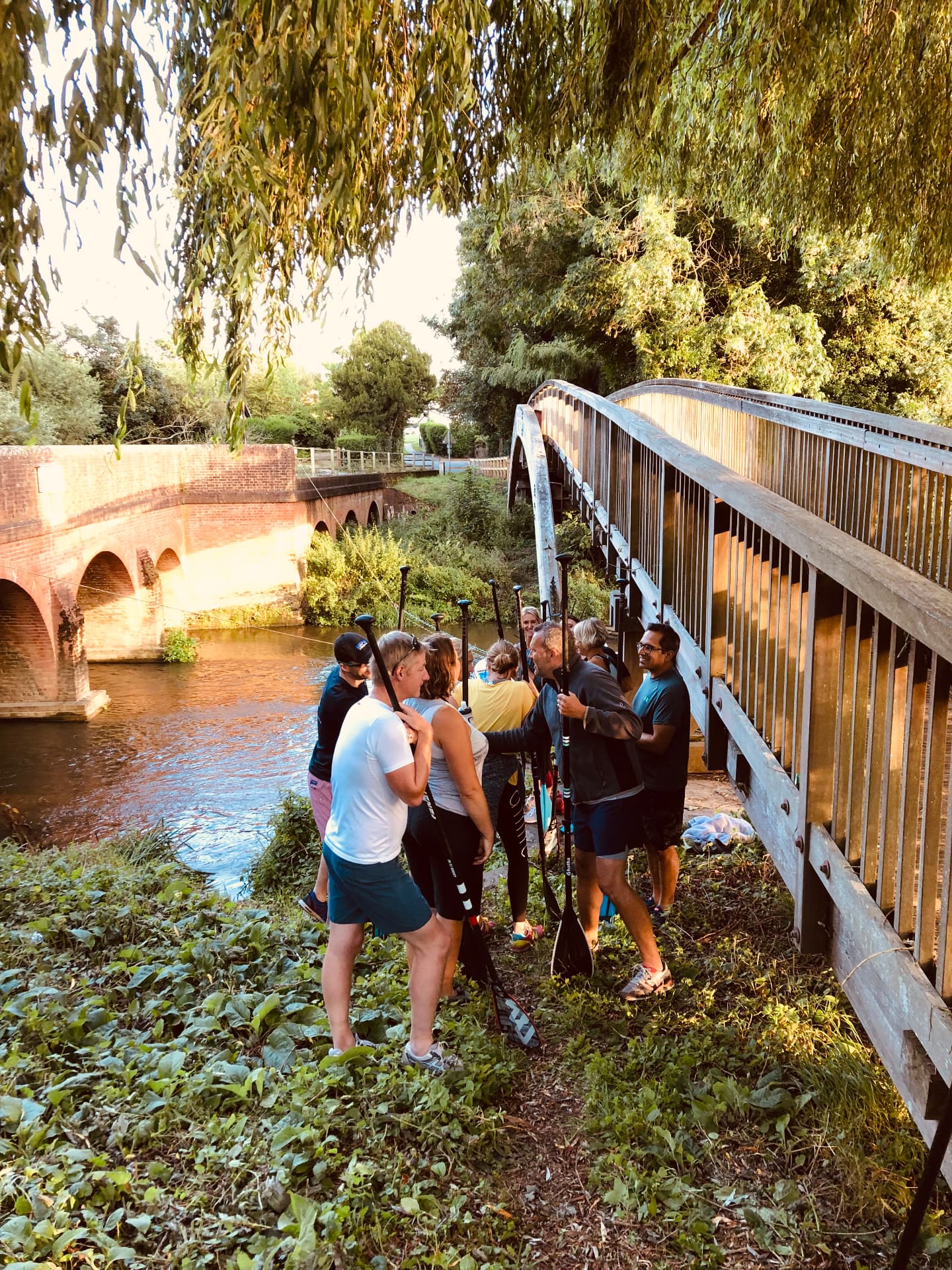
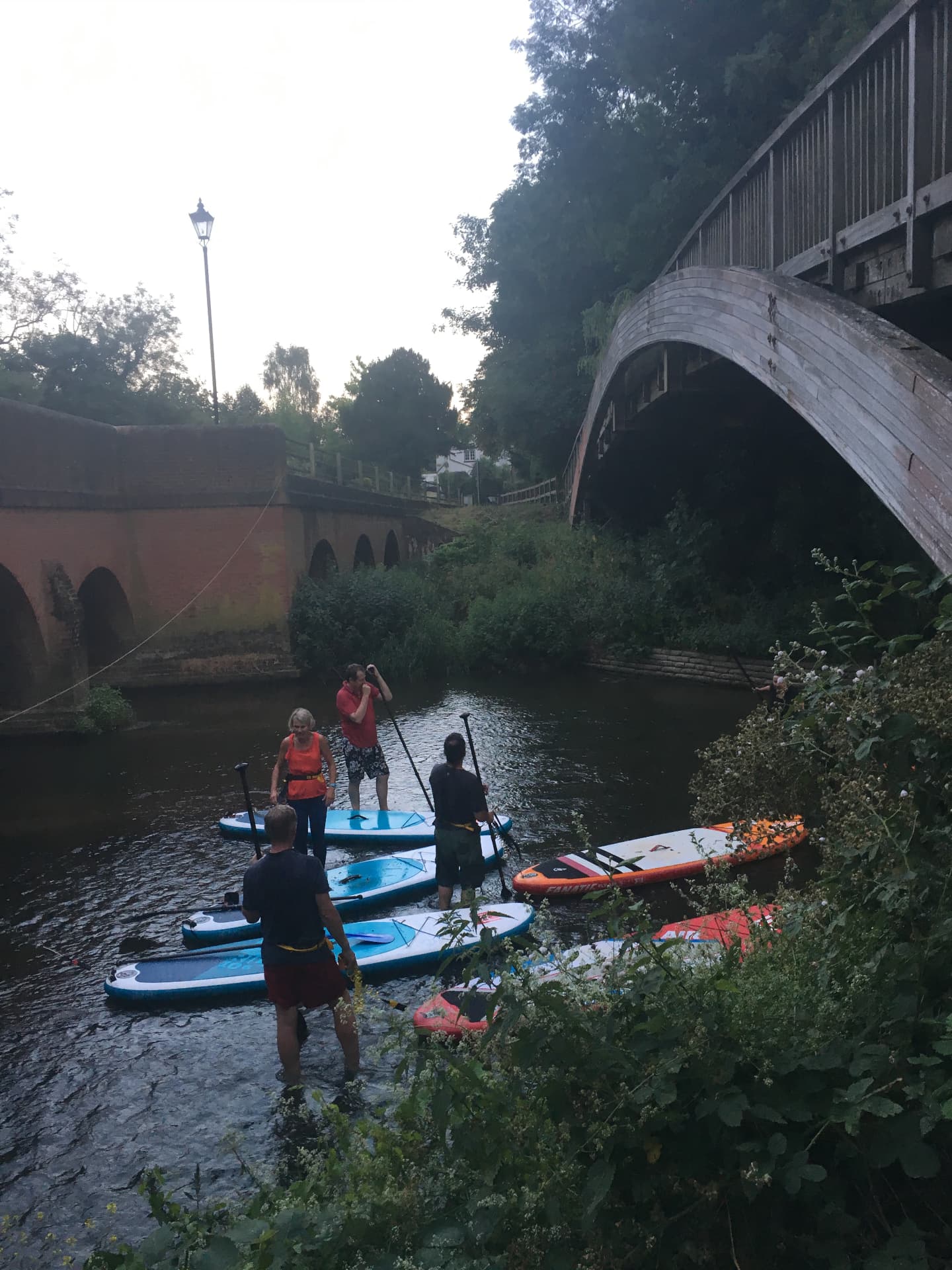
These archive photographs document paddleboarding during an earlier period in the sport’s development. Equipment, guidance and accepted operating practice have continued to evolve. SHACADEMY’s current coaching and operational advice reflects current standards, governing-body guidance and the environment in which an activity takes place. That evolution is part of the point: good operating systems should never become static.
One
Adding water to The SHAC
From the early development of The Surrey Hills Adventure Company, Skip knew that water needed to become part of the proposition. Small-scale paddleboarding had already been tested on private water at Birtley House near Bramley.
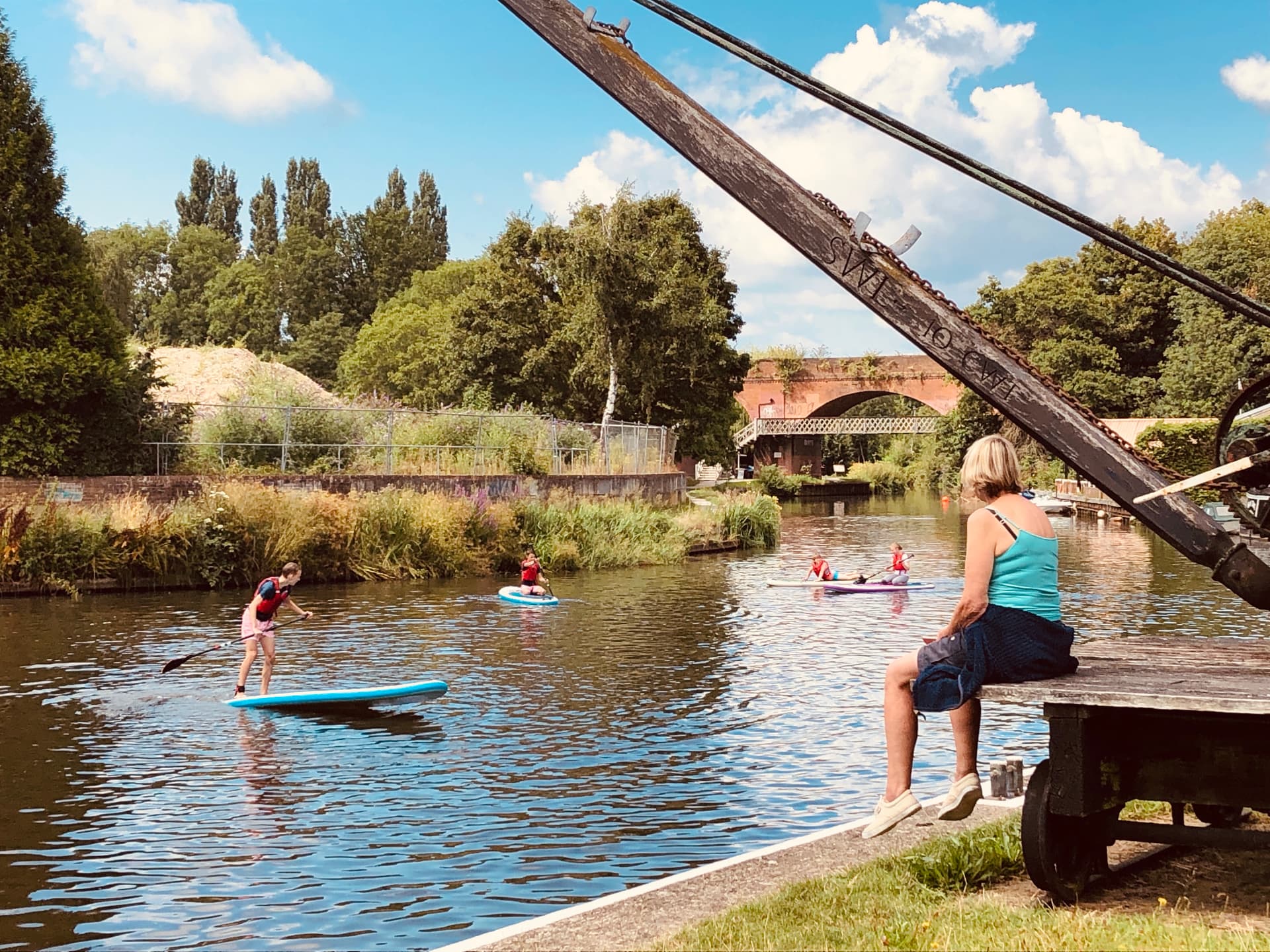
At the same time, Skip began exploring the River Wey. Stand-up paddleboarding was still an emerging sport, and the river offered something very different from a contained lake environment.
It was a living navigation. Locks, boats, anglers, wildlife, other users and changing river conditions all formed part of the experience.
The opportunity wasn’t simply to teach people how to stand on a paddleboard. It was to teach them how to become competent and considerate river users.
Two
Start mobile
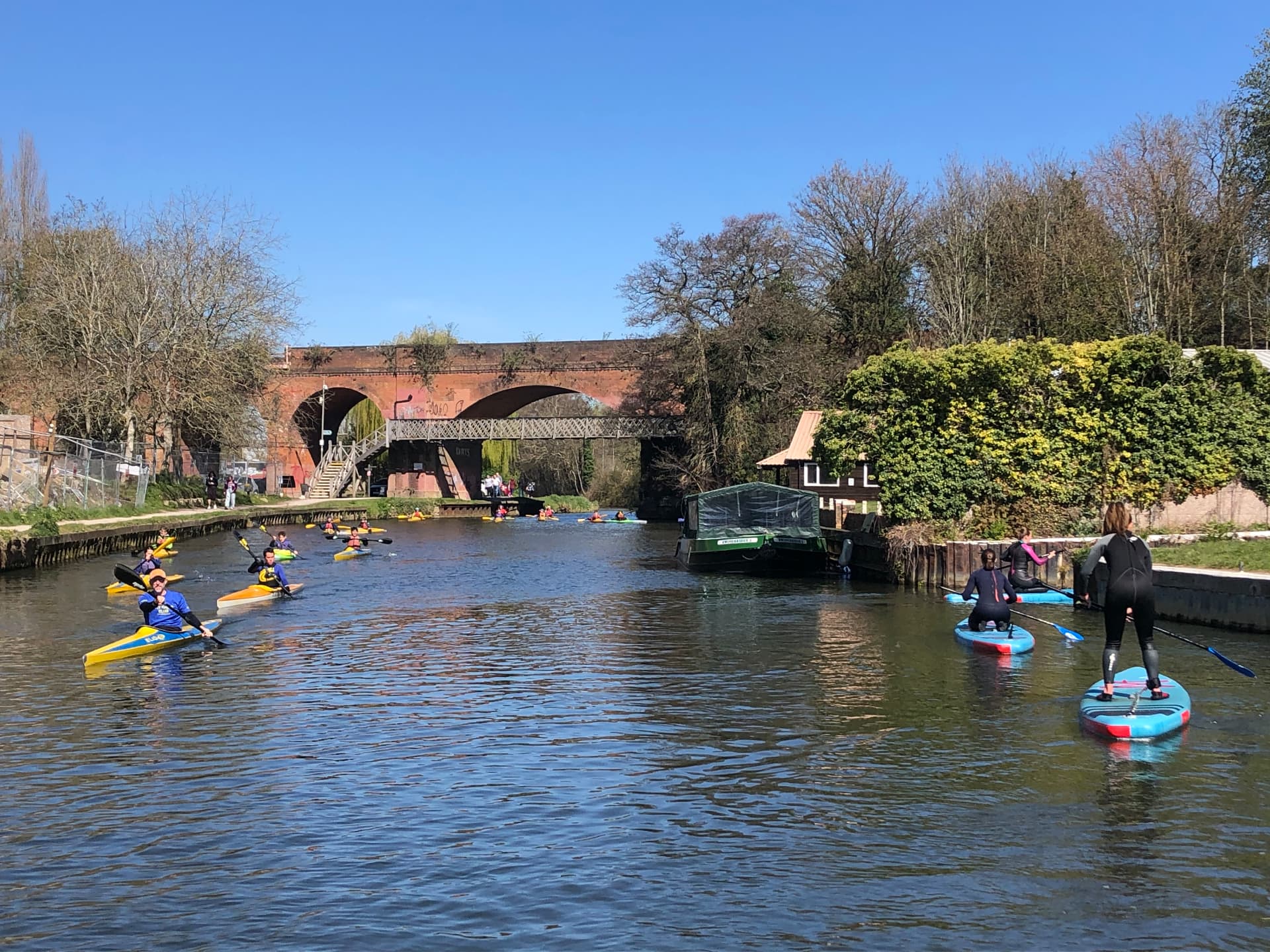
The earliest SHAC River Wey operation was deliberately lightweight. Equipment travelled in the van. Lessons and trips were delivered at different points along the navigation.
Participants were introduced not only to paddleboarding technique but to the practical responsibilities that came with using the river.
The National Trust already had mechanisms governing access to the navigation, including relevant day-access arrangements alongside access available through recognised paddlesport membership arrangements at the time. But rules only work effectively when people know they exist.
By working directly with participants, The SHAC could help organise the appropriate access arrangements while also explaining how the river should be used.
The operation therefore provided more than activity delivery. It created a point of contact between the waterway and the people beginning to use it in a new way.
Three
Policies need people
Responsible waterway use involves more than permission. New paddlers needed to understand:
- how to interact with other river users
- appropriate equipment and personal safety
- navigation expectations
- consideration for anglers and boat users
- respect for wildlife and the river environment
- where and how activity could take place appropriately
Much of this cannot be communicated effectively through rules alone. It happens through conversation. Instruction. Demonstration. Correction. Listening. And sometimes simply explaining why something matters.
At the time, The SHAC was operating as the only dedicated paddleboard and water-activity provider of its kind on the River Wey. That gave the operation an important educational role alongside the activity itself.
A rule sitting somewhere in a system has limited value if the person on the water never understands it.
Four
Prove it before making it permanent
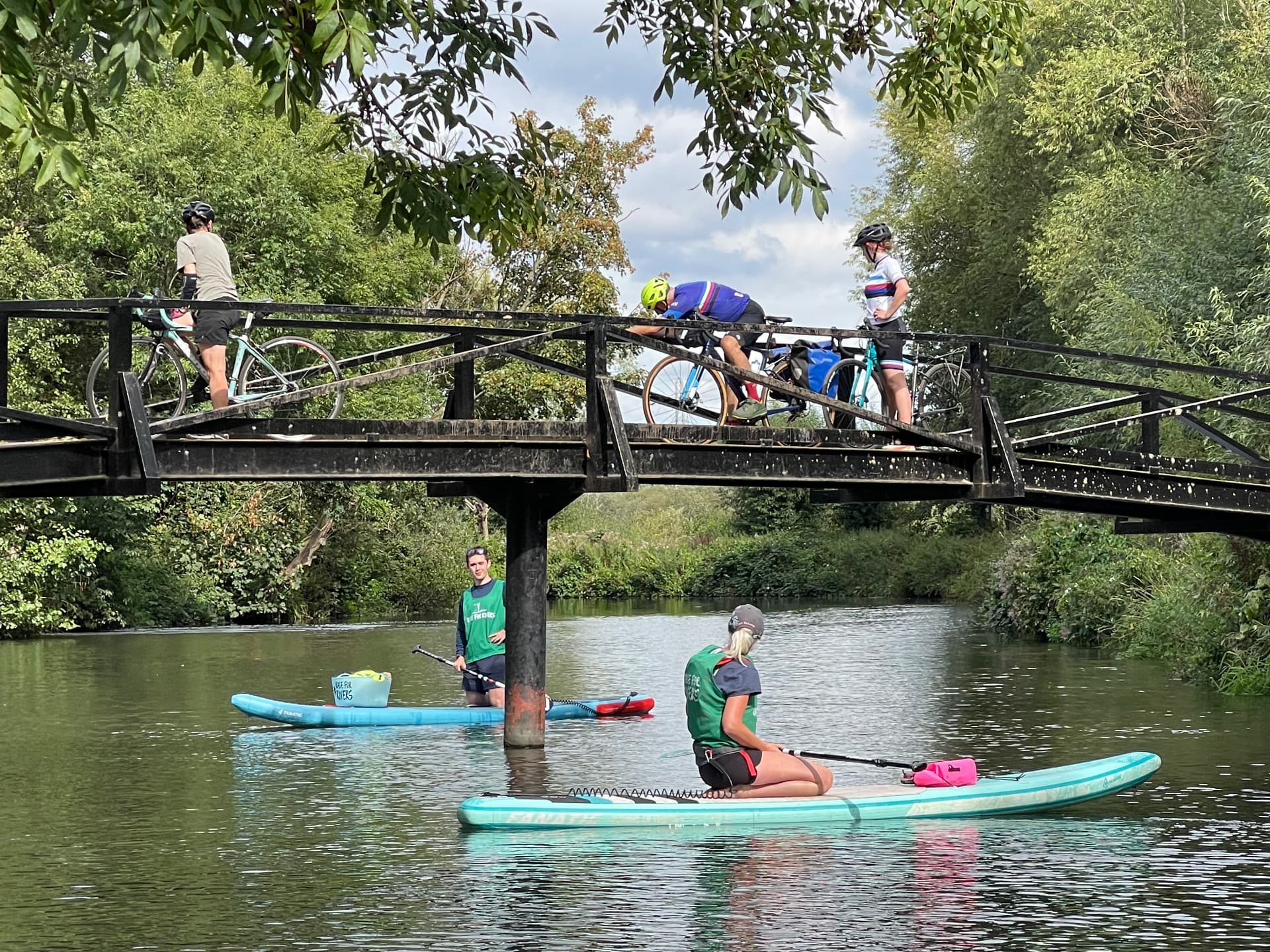
The mobile River Wey operation ran successfully across several seasons. That period allowed the concept to be tested without immediately requiring a permanent centre.
Demand could be understood. Operating procedures could develop. Relationships could form. The National Trust could see how The SHAC worked. And The SHAC could better understand the realities of delivering paddleboarding on an established navigation.
Only after that experience did Skip approach the Dapdune Wharf team with a proposition for something more permanent.
Start at a scale that allows you to learn. Prove the operation. Then decide what deserves to grow.
Five
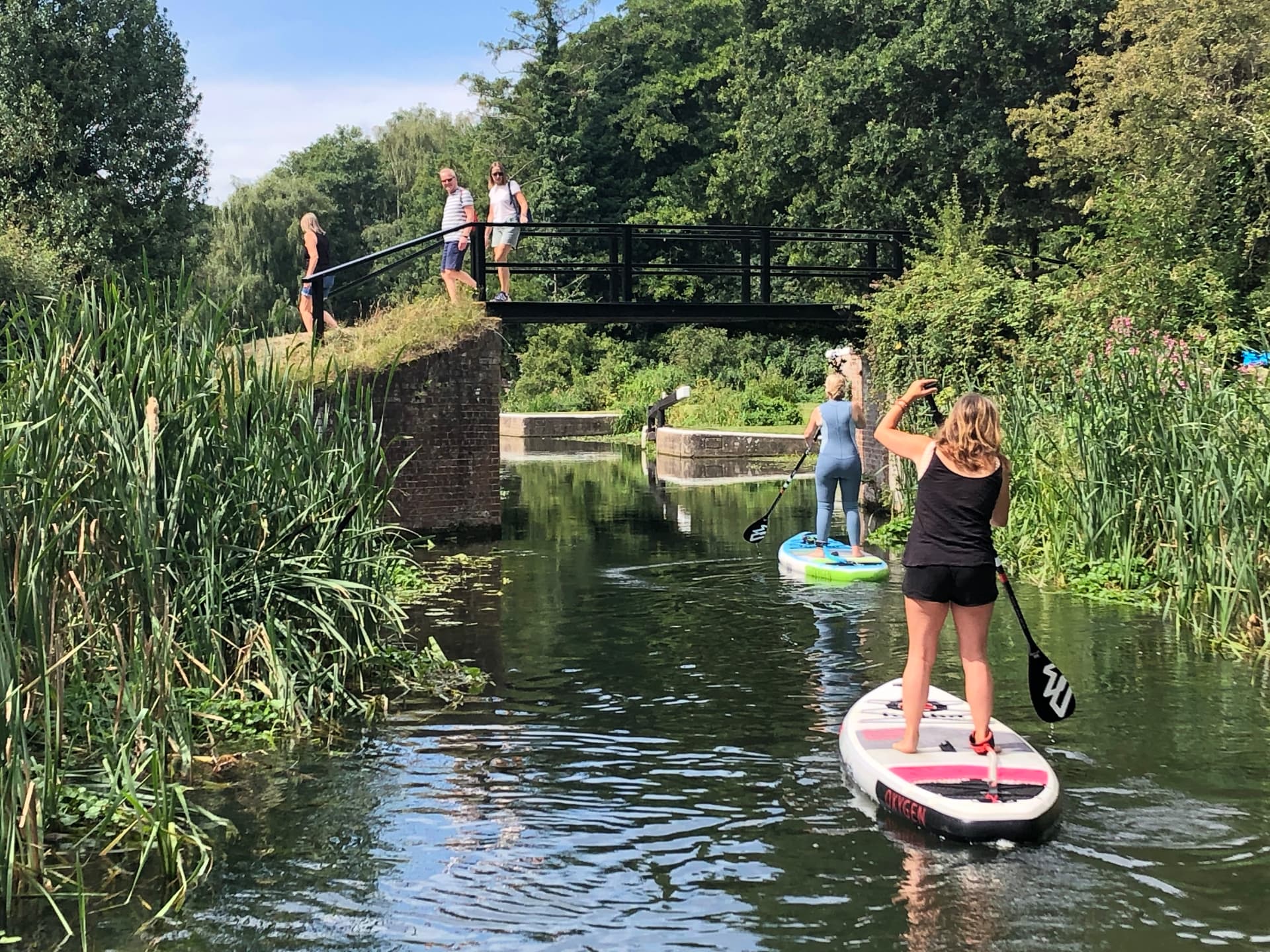
Dapdune Wharf
Skip negotiated with the National Trust team at Dapdune Wharf to establish a permanent SHAC base at the property in Guildford.
A specially modified container was installed on site. It provided secure equipment storage but was designed to do more than simply hold paddleboards. The side could open to create a practical operating point and safe working space for the team.
Skip developed the supporting risk assessments, operating procedures and activity systems required for the permanent operation.
The result was a small but effective river activity centre embedded within an existing National Trust site. The operation became busy and successful, giving people direct access to paddleboarding from the heart of Guildford while connecting them with the wider River Wey.
Six
Aligning the commercial model
The commercial structure mattered too. When Skip established The SHAC’s original Base Camp at Belmont School, he had deliberately proposed a percentage-of-revenue arrangement rather than taking on a large fixed rental commitment.
That meant the interests of venue and operator were aligned. If the operation was small, the cost remained proportionate. If participation grew, both parties benefited.
The landowner benefited when the activity succeeded, while a young outdoor operation could establish itself without unsustainable fixed overhead. Skip subsequently used versions of that principle when proposing other locations, including the National Trust relationship and later Buckland Park. Revenue sharing is not a SHACADEMY invention; the point is that the proposal was written with both parties’ interests in mind rather than simply leasing space.
A good operating model should make it possible for both the place and the operator to succeed.
Seven
The river was the venue
Dapdune Wharf provided a base. But the experience extended far beyond it.
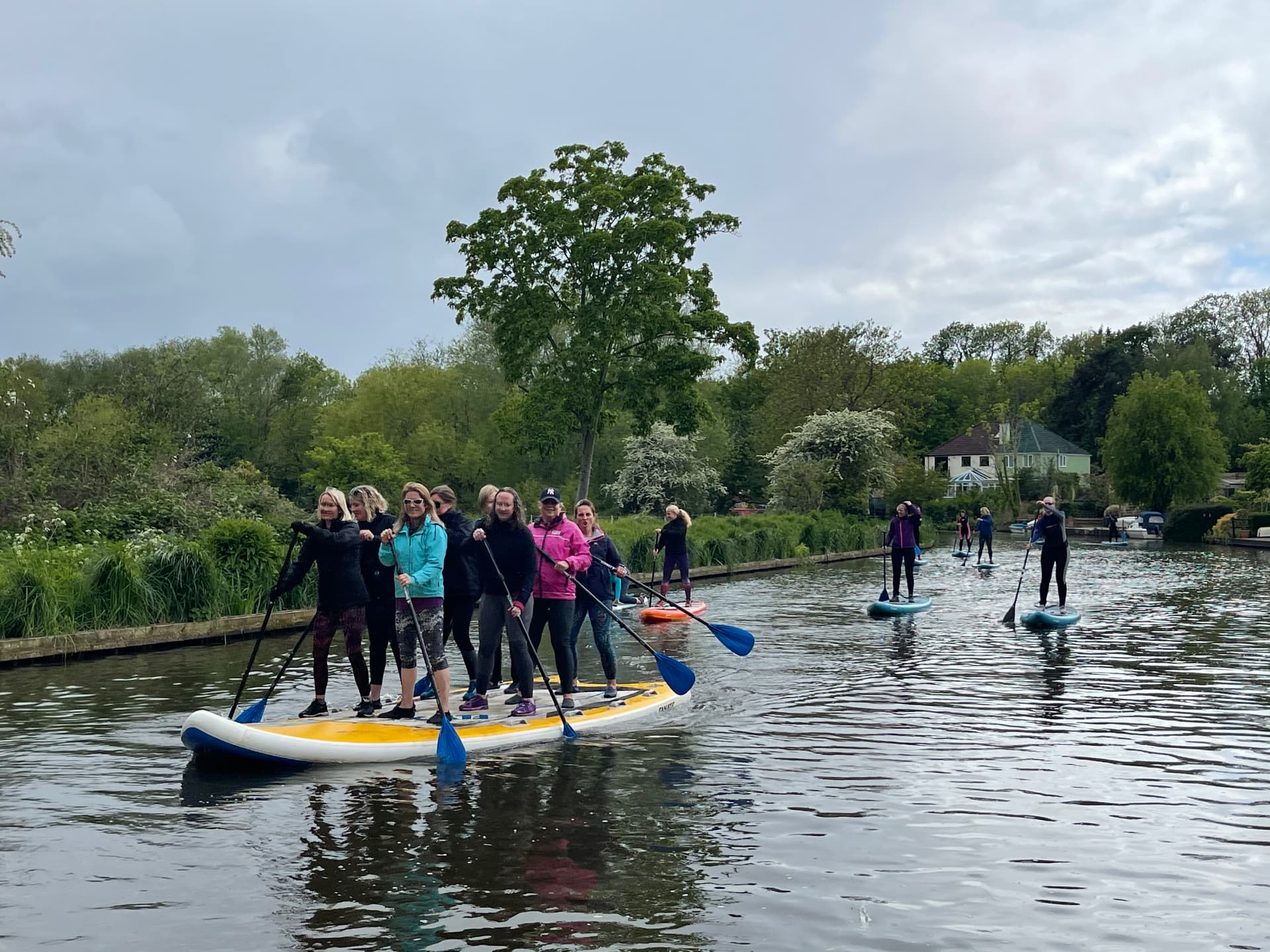
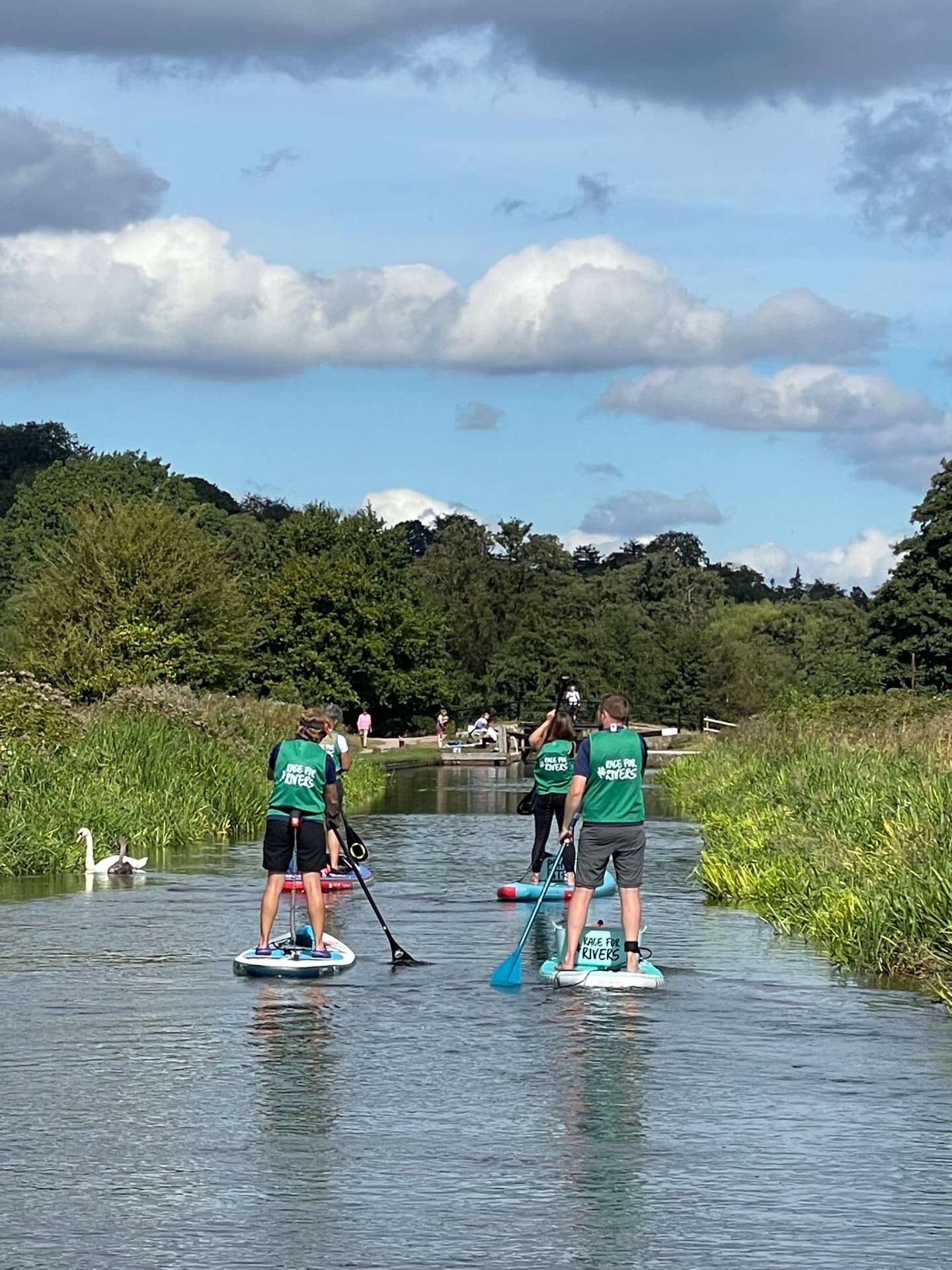
The SHAC used a substantial stretch of the River Wey, delivering trips and experiences between areas including Godalming, Guildford, Wisley and Pyrford. Different stretches of river created different experiences.
Some sessions focused on learning. Others were journeys. And some combined paddling with other providers to create something more memorable.
On selected experiences, participants would paddle to a riverside location where a partner organisation created an outdoor dining experience around fire-cooked food and a shared table. After eating together beside the river, the group paddled back.
The activity can be the beginning of the experience rather than the whole experience.
Eight
Beyond the Wey — opening up the River Mole
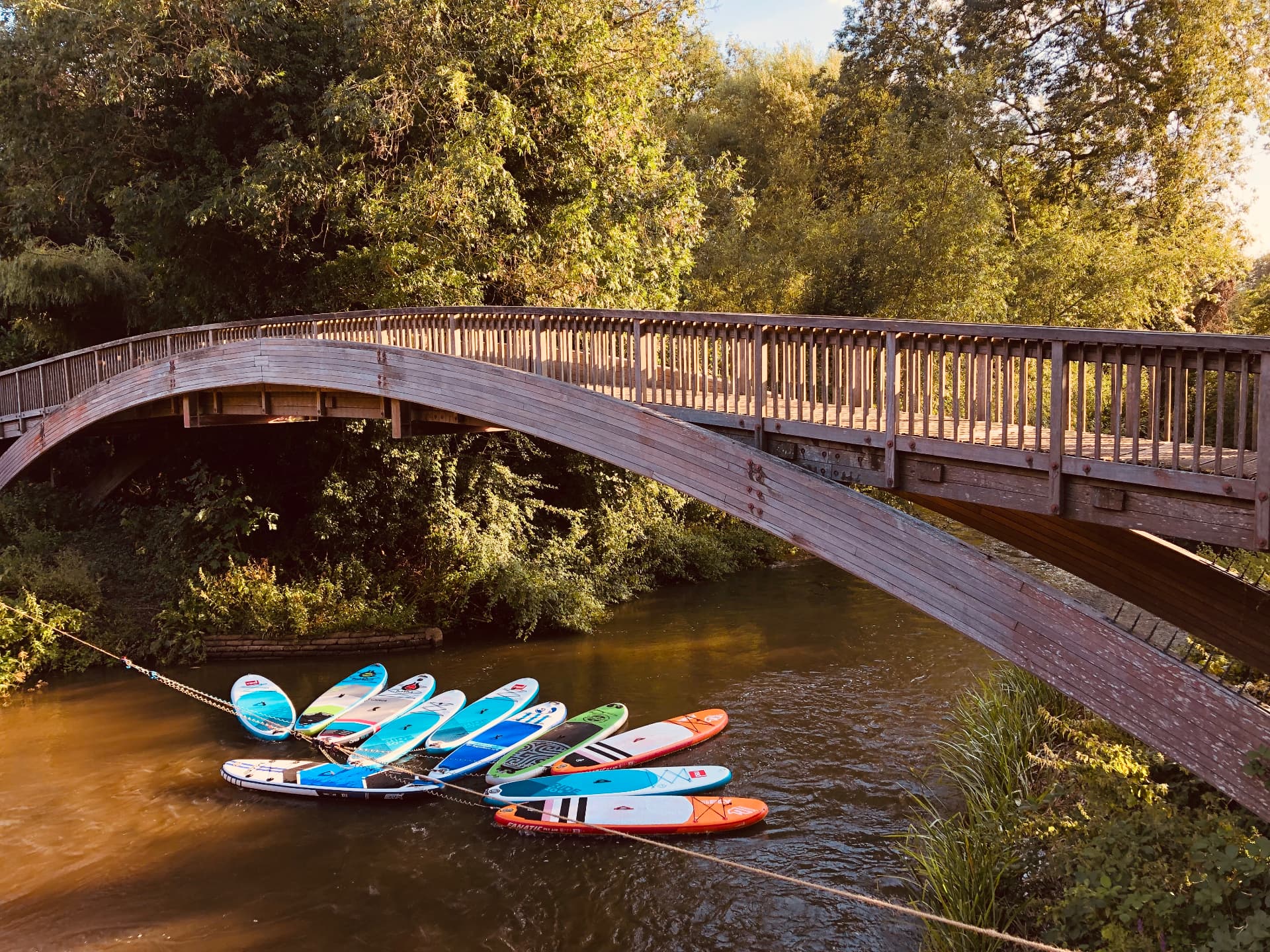
As the National Trust relationship developed, The SHAC was also given permission to run organised paddleboard activity on the River Mole. Groups launched around Brockham Bridge and travelled sections of a much more natural, less infrastructure-led river.
To Skip’s knowledge, The SHAC was the only commercial paddleboard operator running this type of organised activity there at the time. That is offered as lived operational history rather than an independently verified claim.
The Mole presented a different operating problem entirely. There was no base, no container, no yard and no conventional activity centre. The landscape itself determined the operation.
- launch and exit locations
- river levels and conditions
- changing hazards, including trees, shallows and debris
- group management on a narrow, enclosed river
- equipment suited to the environment
- access, parking and landowner permissions
- environmental sensitivity
- contingency planning and alternative plans
- the ability to change decisions on the day
Where there is no centre to fall back on, the operating decisions are the venue.
Nine
A river can host an event without becoming a venue
The SHAC also delivered and managed a paddleboarding leg on the River Mole as part of an Adventure Tri event.
That mattered operationally. A natural waterway could become part of a structured multi-sport participation event — with numbers, timings, transitions, briefings, safety cover and contingency plans — without ever becoming a permanent activity venue.
Everything the event needed was temporary: the launch point, the marshalling, the water cover, the exit and the recovery of equipment. What made it work was planning and judgement rather than infrastructure.
That experience now sits directly behind SHACADEMY’s work on event operations and water safety and on outdoor venue and destination development.
Ten
Working inside somebody else’s place
The River Wey experience was fundamentally different from creating an operation on a blank site. The waterway already had:
- history
- established users
- access arrangements
- navigation rules
- environmental considerations
- landowner responsibilities
- its own organisational culture
The job was not to redesign the river around paddleboarding. It was to introduce paddleboarding in a way that worked within the place.
That required understanding the National Trust’s priorities as well as those of participants. It required humility around other river users. And it required recognising that an activity operator is only one part of a much larger environment.
When you operate in somebody else’s place, understanding the place comes before imposing the activity.
Eleven
Part of a multi-site period — and why it ended
By this stage The SHAC had become a genuinely multi-location outdoor operation. At different points that included Belmont School and Base Camp, Birtley House, the River Wey and Dapdune Wharf, Buckland Park, and organised activity on the River Mole. Each one required a different operating solution, a different landowner relationship and a different commercial conversation. The full story of that growth sits in The SHAC case study.
The Dapdune Wharf operation did not end because the concept failed or because the relationship broke down. It was successful and busy.
COVID forced The SHAC to consolidate its operations. Equipment and activity were brought back to Buckland Park. The subsequent growth of the Buckland operation meant The SHAC did not re-expand into the River Wey location afterwards.
Buckland then grew extremely rapidly, and the business chose not to re-expand the multi-site model. The River Wey chapter is therefore an example of a successful satellite operation consolidated because the wider business changed — not one that failed. That distinction matters.
Twelve
What was learned
Start small enough to learn
A mobile operation can reveal whether a permanent one is justified.
Access and education belong together
Permission to participate means little without understanding how to participate responsibly.
Policies need a human interface
Operators and instructors can help translate organisational rules into real behaviour.
Commercial models shape opportunity
Revenue sharing can reduce early fixed-cost risk and align the interests of venue and operator.
Respect the existing place
New activity must coexist with existing users, history and environmental considerations.
A base does not have to define the experience
Dapdune Wharf provided the operating centre; the River Wey itself provided the journey.
A natural river is an operating decision, not a facility
On the River Mole there was nothing to rely on but planning, judgement and the ability to change the plan on the day.
Practice should keep moving
Equipment, guidance and accepted standards evolved through this period. Operating systems that cannot absorb that change quietly become out of date.
Partnerships can make simple activities richer
Combining paddle journeys with other local experiences created something neither organisation necessarily offered alone.
Thirteen
Why it matters to SHACADEMY
This work predates SHACADEMY. It was undertaken by Skip and The SHAC in collaboration with National Trust teams responsible for the River Wey and Dapdune Wharf.
But the lessons developed through that relationship now inform several areas of SHACADEMY’s work. The experience demonstrated the difference between having a policy and getting people to understand it. It demonstrated how an operator can act as a human interface between an organisation, a place and its users.
It demonstrated how activity can be tested before permanent infrastructure is justified. And it demonstrated the importance of finding a commercial model that works for both operator and asset owner.
Those principles now inform SHACADEMY’s approach to venues and destinations, waterways and water safety operations, landowners and outdoor organisations — and to paddleboard coaching delivered today. Most of all it demonstrated that not every outdoor opportunity needs a centre built for it. Sometimes the opportunity is in understanding an existing landscape, its stakeholders and its constraints well enough to create responsible activity within it.
Good outdoor operations don’t simply put activity into a place. They understand the place, the people responsible for it and the people who want to use it — then find a way for those interests to work together.
Related case studies
Where this story continues
Belmont School
Where the original Base Camp and the revenue-share operating principle used in this project began.
Read case study →Buckland Park Lake
How a former quarry lake evolved through managed access, phased activity, stakeholder negotiation and wider destination development.
Read case study →The SHAC
The wider story of the organisation behind the River Wey operation and how it developed from grassroots outdoor programmes into a substantial year-round business.
Read case study →Related SHACADEMY areas
Where this experience applies
Venue & Destination Development
Helping landowners, venues and operators explore how activity can work practically and commercially within a place.
Explore →Water Safety & Operations
Helping organisations turn policies, procedures and environmental knowledge into workable real-world operations.
Explore →Organisation & Project Discovery
For organisations trying to understand an opportunity, operational problem or gap between their systems and what happens on the ground.
Start Discovery →Start a conversation
Could your place support something more?
A new activity or operating model does not always need to begin with major infrastructure.
SHACADEMY can help landowners, waterways and outdoor organisations explore demand, access, operational requirements, partnerships and commercial models before deciding what comes next.