
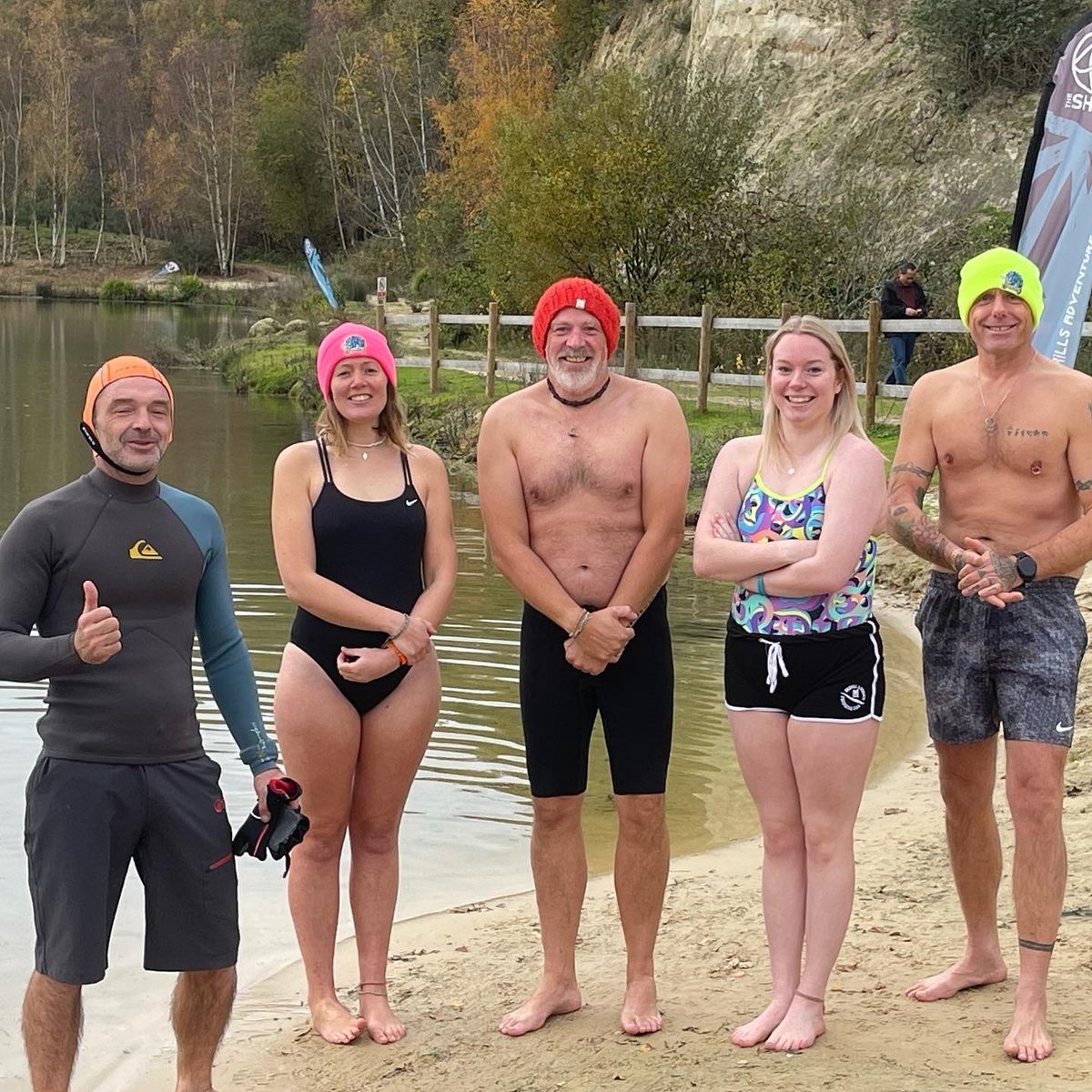
Group of cold-water swimmers together at the water's edge

Swim Events & Challenges

Swimming for enjoyment is a complete answer in itself. But if you want something to aim at — a first event, a distance, a winter, a journey — this is how that progression usually works.

An objective changes how you swim

Almost everyone who takes on a swim objective improves faster than they expected — not because the training is clever, but because a date makes them swim deliberately. The objective matters less than having one.

It does not have to be a race. Distance totals, a cold-water winter, a lake crossing or simply an event day with other people all do the same job. What changes is what you need to prepare for.

Kinds of objective

What people usually aim at

First open-water event

A short, supervised swim — the day itself is the challenge.

Usually a few hundred metres to a kilometre at a managed venue or a mass-participation swim. The subject is the start, the crowd, sighting and swimming somewhere unfamiliar. Distance is deliberately not the difficulty.

Distance swim

A mile, 5 km, or a season total. Patience rather than speed.

Progression is mostly frequency, pacing and being comfortable in the water for longer than you are used to. Technique matters here because inefficiency compounds over distance.

Cold-water or winter challenge

Swimming through the seasons, or a short swim in genuinely cold water.

Adaptation is gradual, personal and not something to rush. Judgement about how long to stay in matters far more than any target, and preparation includes getting warm afterwards.

River or lake challenge

Inland water with flow, temperature layers and access considerations.

Often the most practical objective for people who train inland. Flow, depth, water quality, exits and permission are the planning subjects rather than distance alone.

Sea or coastal swim

Tide, swell, wind and a moving horizon.

The sea asks for different skills: sighting in chop, reading tide and wind, entries and exits, and accepting that the plan may change on the day.

Adventure / expedition-style swimming

Point-to-point swims, crossings and multi-stage days.

These become logistical projects — support, feeding, exits, temperature, permissions and weather windows. Closer to expedition planning than to racing.

Triathlon and swim-run swims have their own demands: a fast, crowded start, sighting under pressure, and getting out and moving again. Very different from a steady lap of a lake. Event distances, wetsuit rules, water-temperature policies and entry requirements are set by organisers and change between editions. Always work from the organiser’s current information.

Progression

From swimming for enjoyment to a real objective

1

Swim in open water regularly

Not far — often. Regular exposure at a supervised venue does more for confidence than any single long swim, and tells you honestly how you respond to cooler water.

2

Sort breathing, sighting and calm

Most difficulty in open water is not fitness. It is the first two minutes: breathing, and looking up without losing rhythm. This is the highest-value thing to coach.

3

Pick an objective with a date

A date changes behaviour. Choose something modest enough that you would be disappointed to miss it rather than relieved.

4

Build the specific thing it asks

Distance, cold, crowd, or logistics — most objectives are mainly one of those. Train the one that actually applies rather than a generic programme.

5

Rehearse the day

Same kit, same warm-up, same food, similar water. Rehearsal removes almost all the surprises people describe afterwards as the hard part.

Objectives worth knowing about

A few swims to aim at — researched, not personal claims

These are researched from the organisers' own published information and offered as discovery, not as events we have completed ourselves. Distances, dates, wetsuit rules and entry requirements are set by organisers and change — always work from their current information.

Researched — not first-hand

The Big Swim Series

The SHAC, Buckland Park Lake, Surrey

A non-competitive open-water swim challenge on a 2.5 km loop of the big lake, with a waved beach start.

Who it suits
Swimmers who want a real distance challenge in a relaxed setting rather than a race environment, including those stepping up from shorter venue swims.
Sensible experience
Comfortable swimming continuously in open water for the loop distance. Check the organiser page for current eligibility, wetsuit and safety requirements.
Preparation
Regular open-water swimming through the warmer months, sighting practice around a loop, and being settled about a waved beach start.
How we can help
Building comfortably up to the loop distance, sighting and pacing, and sensible preparation for a longer swim in a managed lake.

The organiser currently lists the series as running May to September, £25 per person. Check the organiser page for current eligibility, wetsuit and safety requirements.

The SHAC — current information →
Researched — not first-hand

Swim Serpentine

Hyde Park, London — lake

A managed city lake swim with several distance options.

Who it suits
Swimmers wanting a well-organised first open-water event, and those stepping up to a mile or beyond in a supported setting.
Sensible experience
Able to swim the distance comfortably in a pool, with some open-water sessions behind you.
Preparation
Open-water frequency, sighting, and being calm in a busy start. Practise the distance in open water, not only in a pool.
How we can help
Pool-to-open-water transition, sighting and pacing, and a build that arrives at the distance without cramming.
London Marathon Events — current information →
Researched — not first-hand

Great North Swim

Windermere, Lake District

A large lake swim event with distances from short to long.

Who it suits
First-timers through to distance swimmers, in cool inland water.
Sensible experience
Comfortable in cooler open water, and able to swim your chosen distance without needing to stop.
Preparation
Acclimatisation to lake temperatures, sighting practice, and rehearsing your wetsuit and warm-up.
How we can help
Cool-water preparation, stroke efficiency for the distance and a plan for the morning itself.
Great Run / Great Swim — current information →
Researched — not first-hand

Henley Swim events

River Thames, Henley-on-Thames

River Thames swims, from short club swims to long-distance days.

Who it suits
Swimmers drawn to river swimming, and those wanting a long single-day distance objective on flowing water.
Sensible experience
Confident in open water, comfortable with flow, boat traffic and swimming for extended periods.
Preparation
Sustained distance work, feeding on longer swims, sighting on a river line and getting used to the water temperature.
How we can help
Distance pacing, feeding, river-specific sighting and a realistic build to the day.
Henley Swim — current information →
Researched — not first-hand

Chillswim Coniston

Coniston Water, Lake District

A long lake-length swim — a serious distance objective.

Who it suits
Experienced open-water swimmers ready for a long, cool inland swim with support.
Sensible experience
Substantial open-water distance experience and comfort spending hours in cool water.
Preparation
Months of progressive distance, feeding practice, shoulder durability and temperature tolerance.
How we can help
Long-swim structure, feeding and pacing plans, and honest assessment of readiness.
Chillswim — current information →
Researched — not first-hand

Bantham Swoosh

River Avon estuary, South Devon

A tide-assisted estuary swim out towards the sea.

Who it suits
Confident open-water swimmers who like the idea of swimming with the tide rather than against a clock.
Sensible experience
Comfortable in moving salt water and in swells or chop near the coast.
Preparation
Sighting in moving water, salt-water swimming practice, and being relaxed about conditions changing.
How we can help
Sea and estuary confidence, sighting in chop, and preparation for a point-to-point swim.
Outdoor Swimming Society — current information →
Researched — not first-hand

Winter and ice swimming events

United Kingdom — winter venues

Short swims in genuinely cold water, under strict organiser rules.

Who it suits
Swimmers who already swim through the colder months and want a structured cold-water objective.
Sensible experience
A season or more of consistent cold-water swimming, and honest knowledge of your own responses.
Preparation
Gradual seasonal adaptation, a rehearsed rewarming routine, and swimming only where there is proper safety cover.
How we can help
Sensible cold-water progression, technique that survives cold shock, and the judgement of when not to swim.
Various — check the specific event — current information →

Why the coaching is credible

A swimming teacher and open-water coach, not a competitive swimmer

SHACADEMY’s open-water coaching is led by founder and lead coach Skip Innes. This background sits here, below the practical detail, because it is here to show the coaching is credible rather than to be the story.

Swimming and lifeguarding are where I started. I have been a lifeguard and swimming instructor since I was 16, and I have taught swimming for many years — complete beginners, adults and children — and been an STA Open Water Swim Coach for more than ten years.

My own open-water swimming came through the sea and surfing first, and rivers and lakes later. That includes a long spell in Costa Rica within the last few years swimming daily in surf and sea, and surf and sea swimming in Australia — so surf conditions are water I am confident and comfortable in. I am an adventure and open-water swimmer rather than a competitive one, and I have not done a long list of swim events myself. What I do bring is a lot of time around water and a lot of time teaching in it.

Most of the improvement I see does not come from training harder. It comes from a few simple technical adjustments, explained clearly enough that they stick — and from removing whatever is making somebody anxious in the water. That communication is the part I am genuinely good at.

Where an event is listed on this site, it is because it looks like a good objective — researched from the organisers' own information. It does not mean I have swum it.

Background

  • Lifeguard and swimming instructor since age 16.
  • STA Open Water Swim Coach for more than ten years.
  • Years of teaching complete beginners, adults and children.
  • Technically strong swimmer, with a focus on small durable stroke changes.
  • Adventure and cold-water swimming through the sea and surfing first, then rivers and lakes.
  • First-hand surf and sea swimming experience, including daily distance swimming in Costa Rica and sea swimming in Australia.

What Skip coaches

  • Stroke and technique — small, durable changes rather than a rebuild.
  • Breathing, and the rhythm that holds up when you are working hard.
  • Stamina and endurance for longer swims.
  • Open-water confidence, especially for nervous swimmers.
  • Sighting and navigation while swimming.
  • Practical open-water skills: entries, exits, kit and reading a venue.
  • The transition from pool swimming into open water.
  • Cold-water preparation and sensible seasonal progression.
  • Event and challenge preparation, planned backwards from your objective.

Prepare with Skip

Challenge preparation, 1:1

Coaching here is person-centred: a few clear technical changes, better decisions, and preparation for the objective you actually have.

Private open-water coaching planned backwards from your objective — technique that holds up in open water, sighting and pacing, gradual cold-water progression, kit decisions, and the practical planning behind longer or more committing swims. Skip coaches this as a swimming teacher and open-water coach: most gains come from a few simple technical adjustments, clearly explained.

Looking for water to train in? Where to Swim · Cold water: Skip’s tips

Common questions

How far should my first open water event be?

Short enough that you are thinking about enjoying it rather than surviving it — often 400 m to 1 km. If you can swim the distance comfortably in a pool and have swum in open water several times, a first short event is usually realistic.

Do I need a wetsuit?

It depends on the water temperature, the event's own rules and your cold-water experience. Many events set wetsuit requirements by temperature, so the organiser's current information decides this rather than preference.

What does swimming challenge preparation with SHACADEMY involve?

Private 1:1 sessions with Skip, planned backwards from your objective: technique that survives open water, sighting and pacing, sensible cold-water progression, kit decisions, and the practical planning behind longer or logistically complex swims.

Can you help with a cold-water objective?

Yes, with a strong emphasis on gradual progression and honest judgement. Cold-water swimming carries real risk, and preparation is as much about knowing when to get out as about staying in.

SHACADEMY does not organise or process entries for third-party events; enter through the organiser and follow their current requirements. Open-water and cold-water swimming carry real risk, and nothing here is an assurance about any water, event or condition — this is preparation guidance, and the decision on the day is always yours.