Operating Experience Case Study
The SHAC — From an Idea in the Woods to a Major Outdoor Operation
From grassroots outdoor programmes to a substantial year-round adventure and watersports operation.
The Surrey Hills Adventure Company — The SHAC — didn't begin with a lake, a watersports centre or a grand plan to build a large outdoor business.
It began with a belief in what being outdoors can do for people.
Founded by Scott 'Skip' Innes around 2013, The SHAC developed through more than a decade of outdoor delivery, experimentation, venue development, water safety, activity creation, events, technology, partnerships and learning.
The organisation continues today under the leadership of Julie Willard and its operational team.
The experience gained through building and developing The SHAC now forms an important part of the thinking behind SHACADEMY.
At a glance
- Founded
- 2013
- First Base Camp
- Belmont School, Surrey Hills
- Buckland Park
- Operational from 2017
- Environments
- Woodland, trails, rivers & open water
Focus areas
- Venue & Destination Development
- Water Safety & Operations
- Outdoor Learning
- Activity & Product Development
- Events
- Technology & Systems
- Partnerships
- Customer Experience
Section 1
It started with a reason to get outside
The SHAC's origins weren't really about outdoor sport.
They were about what being outdoors can do for people.
After building businesses in property and tourism, Skip realised that a professional life increasingly spent behind a desk wasn't where he wanted to be. He retrained in areas including mountain-bike coaching and outdoor first aid and became increasingly involved in outdoor education and activity.
At the same time, his experience as a Scout leader reinforced something he was also observing as a parent: technology was becoming an increasingly powerful part of young people's lives.
The answer wasn't to reject technology. It was to create balance.
Time outside. Adventure. Appropriate risk. Communication. Independence. Getting muddy. Building something. Lighting a fire. Helping somebody else.
Skip believed some of the experiences that worked so powerfully in outdoor youth organisations could be made accessible to a much wider audience.
That belief became The Surrey Hills Adventure Company.
Section 2
The first project
The first paid SHAC project was a woodland day for Surrey Young Carers.
Using a site near Leith Hill, SHAC developed a programme of woodland activities that gave young people carrying significant responsibilities at home an opportunity to step away from everyday pressures, spend time outside, connect with one another and share experiences.
It established an idea that remained important throughout The SHAC's development.
The activity is rarely the whole point.
Outdoor activity can be a vehicle for confidence, communication, connection, challenge, respite — or simply having a really good day outside.
Section 3
Base Camp: Belmont & the Surrey Hills
An unexpected conversation helped turn the idea into something more permanent.
As Skip stepped away from his previous business, he explained his plans for The Surrey Hills Adventure Company to the head of Belmont School. She asked to see the business plan.
Belmont subsequently provided The SHAC with its first permanent Base Camp on Leith Hill. From there, SHAC delivered mountain biking, children's camps, after-school clubs, woodland activity, team building and corporate experiences.
Children built dens, used rope swings, made fires, explored the woods, solved problems and learned to look out for one another. The company also began taking groups of young people away on adventure trips.
The reputation grew organically.
Julie Willard became increasingly involved as the organisation developed, initially supporting areas of delivery and administration before later taking on a much larger role within the business.
Read more about the early years in the Belmont School case study.
Section 4
From woodland to water
While the Belmont operation continued, another part of The SHAC was developing on the River Wey.
The early paddleboarding operation initially ran from a van, delivering lessons, guided trips and river-specific skills while developing relationships and contributing to education around responsible river use. The operation subsequently established a permanent base at Dapdune Wharf, with equipment stored on site. That work is documented in full in the River Wey & River Mole case study.
Stand-up paddleboarding was still an emerging activity in the UK. SHAC worked with individuals, families, Scouts, Guides, businesses and schools, developing sessions around the particular skills, environmental understanding and safety considerations required on moving inland water.
Projects ranged from everyday lessons and guided trips to bespoke challenges. For Eton College, for example, SHAC created a giant-paddleboard challenge designed to test Army Cadet participants through teamwork, communication and activity on the water.
A pattern was emerging that would characterise much of The SHAC's development:
Spot the opportunity. Understand the environment. Work out what's needed. Build the experience. Learn from it.
Section 5
A sandpit, some water and a tent
Negotiations around a new opportunity at Buckland Park began in 2017.
The SHAC already had an established reputation, but had never operated a permanent open-water activity venue. Skip developed the proposition and business plan and made the case for what The SHAC could create there. The SHAC began operating at Buckland Park in 2017, with the first full operational summer following in 2018.
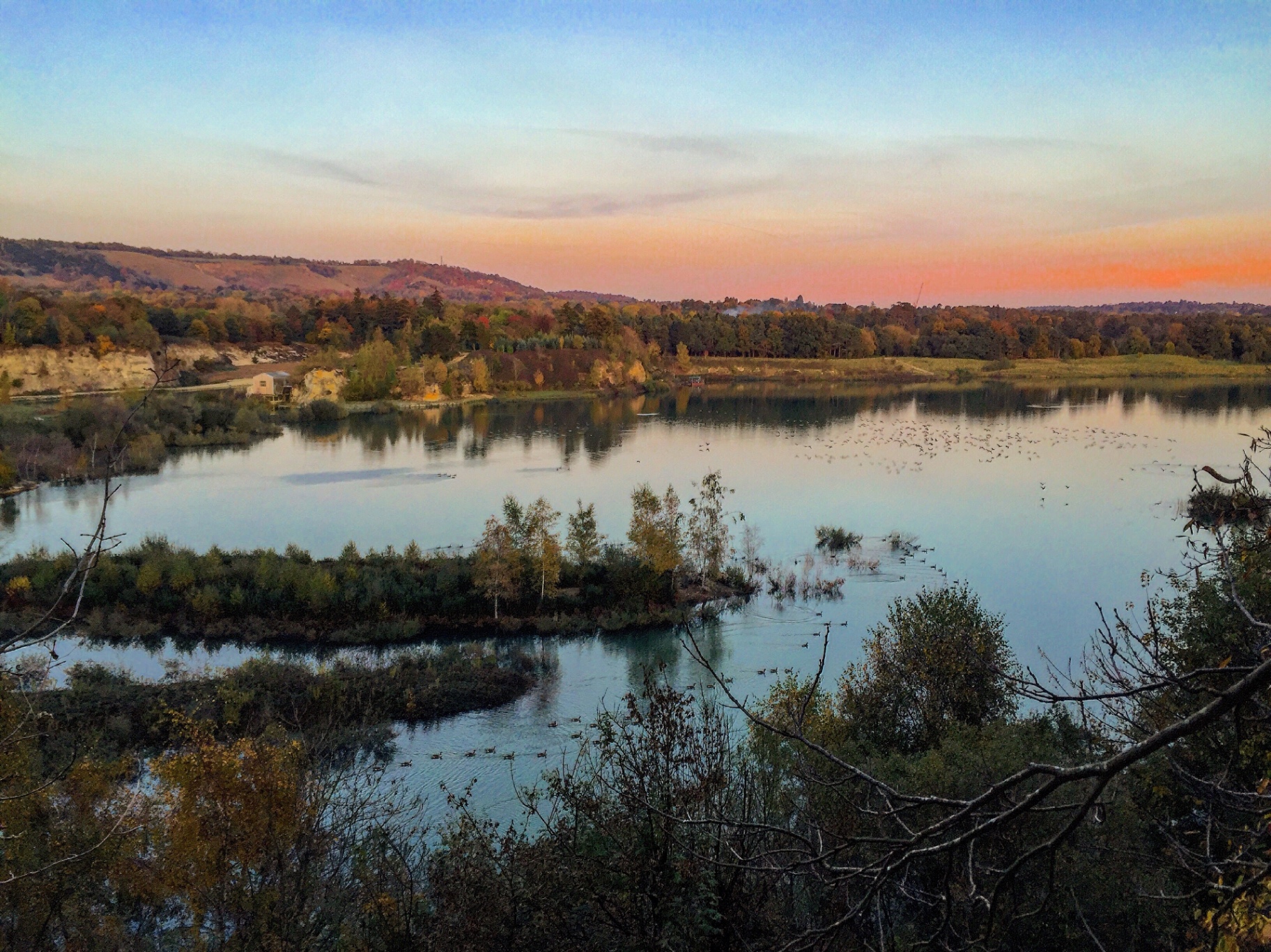
What existed was essentially a former sand quarry filled with water. There was an old quarry boathouse, but almost none of the visitor infrastructure associated with Buckland Park today.
The customer-facing SHAC operation began from a tent on the beach. Equipment stored in the old boathouse had to be moved across the water to set up the activity area.
The tent eventually became a container. A scaffold structure was then built from the container to create a simple covered working area.
It was basic. It was exposed. And it created freedom to experiment.
Woodland activity continued alongside the water. Paddleboarding developed. Open-water swimming grew. New activities and ideas were tested, adapted, expanded or abandoned.
It was grassroots venue development in its most literal form.
The wider story of the destination is covered in the Buckland Park Lake case study.
Section 6
Ahead of the curve
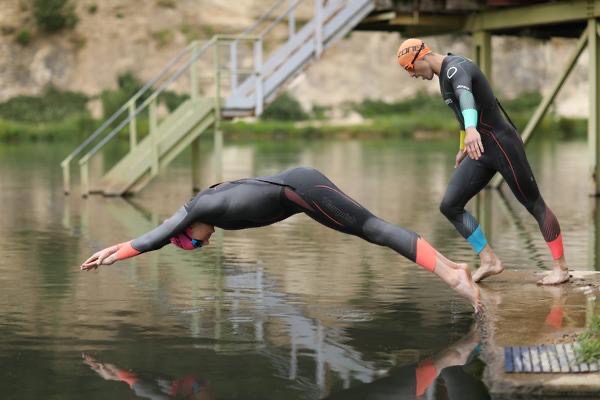
Two activities that would eventually become mainstream were still relatively niche when The SHAC began investing in them: stand-up paddleboarding and organised open-water swimming. Winter swimming was more unusual still.
The SHAC became an early UK operator of organised year-round inland open-water swimming, developing the operational knowledge, safety systems and customer experience required to make cold-water participation accessible to a wider audience.
There was scepticism in the early years. But a small community formed.
Then it grew.
Over time, both paddleboarding and cold-water swimming moved dramatically towards the mainstream. The SHAC found itself already operating in spaces that were about to experience significant public growth.
Some of that was judgement. Some of it was timing.
What mattered was being willing to experiment early enough to learn.
Section 7
Safety breeds good experience
The SHAC didn't grow simply by shouting louder. Much of its growth came through reputation. People came, felt looked after, enjoyed the environment and returned or told somebody else.
That experience reinforced one of the most important lessons from the entire SHAC journey.
Safety breeds good experience.
Good experience breeds success.
In outdoor activity, safety and customer experience should not be opposing forces. Good safety enables the experience.
The objective is not to remove adventure or make the customer feel surrounded by rules. It is to develop the knowledge, people and systems behind the experience so participants can engage with it responsibly.
As The SHAC grew, that required increasingly sophisticated operating procedures, emergency planning, risk assessments, staff systems, activity structures and water-safety arrangements.
The systems became more complex. The principle remained simple:
Create the conditions in which people can enjoy the outdoors with confidence.
Section 8
Building systems around real operations
Growth also created an information and technology challenge.
The earliest booking and customer-management processes were necessarily simple, including manually managed spreadsheets and other lightweight systems. As participation and operational complexity increased, those tools stopped being enough.
Skip conceived and specified the operational requirements for a bespoke booking and participant-management system and worked with a developer to build the technology around the needs of the operation. That included a logging-band system designed to help manage participants and make relevant information accessible when operational or emergency teams needed it. That collaboration is documented in full in The SHAC booking and operational system case study.
Alongside the technology sat the less visible backbone of the organisation: normal operating procedures, emergency action plans, risk assessments and activity-specific systems. Skip developed much of this original operational architecture, with input and subsequent development from Julie and other members of the growing SHAC team.
It created an important lesson that now informs SHACADEMY's work around technology and organisational intelligence:
Technology works best when it understands the operation it is there to support.
Section 9
When the playbook disappears
COVID presented an existential challenge.
An organisation built around bringing people together suddenly faced closure, uncertainty and the possibility that years of work could disappear. There was no established playbook for operating an outdoor swimming and activity venue through a pandemic.
The team returned to first principles.
Understand the risk. Understand the environment. Be cautious. Make practical decisions. Communicate clearly. Only do what can be done responsibly.
The scale and outdoor nature of Buckland Park eventually provided opportunities for people to access water and nature while maintaining the separation required at the time. As circumstances evolved, The SHAC developed careful ways of operating within them. The River Wey operation was consolidated back to Buckland.
At the same time, public interest in outdoor activity, open-water swimming, cold water and paddleboarding accelerated dramatically. The market moved towards activities The SHAC had already spent years understanding.
Buckland grew significantly.
Section 10
Keep creating reasons to participate
Experimentation continued as The SHAC matured. New activities, courses, events and experiences were repeatedly developed and tested.
One example was The Big Swim, created by Skip in 2023. Rather than creating another competitive swimming race, the idea was deliberately different: a non-competitive open-water challenge around the lake where participation, the environment and the experience mattered more than finishing position. The event developed into a popular part of The SHAC calendar.
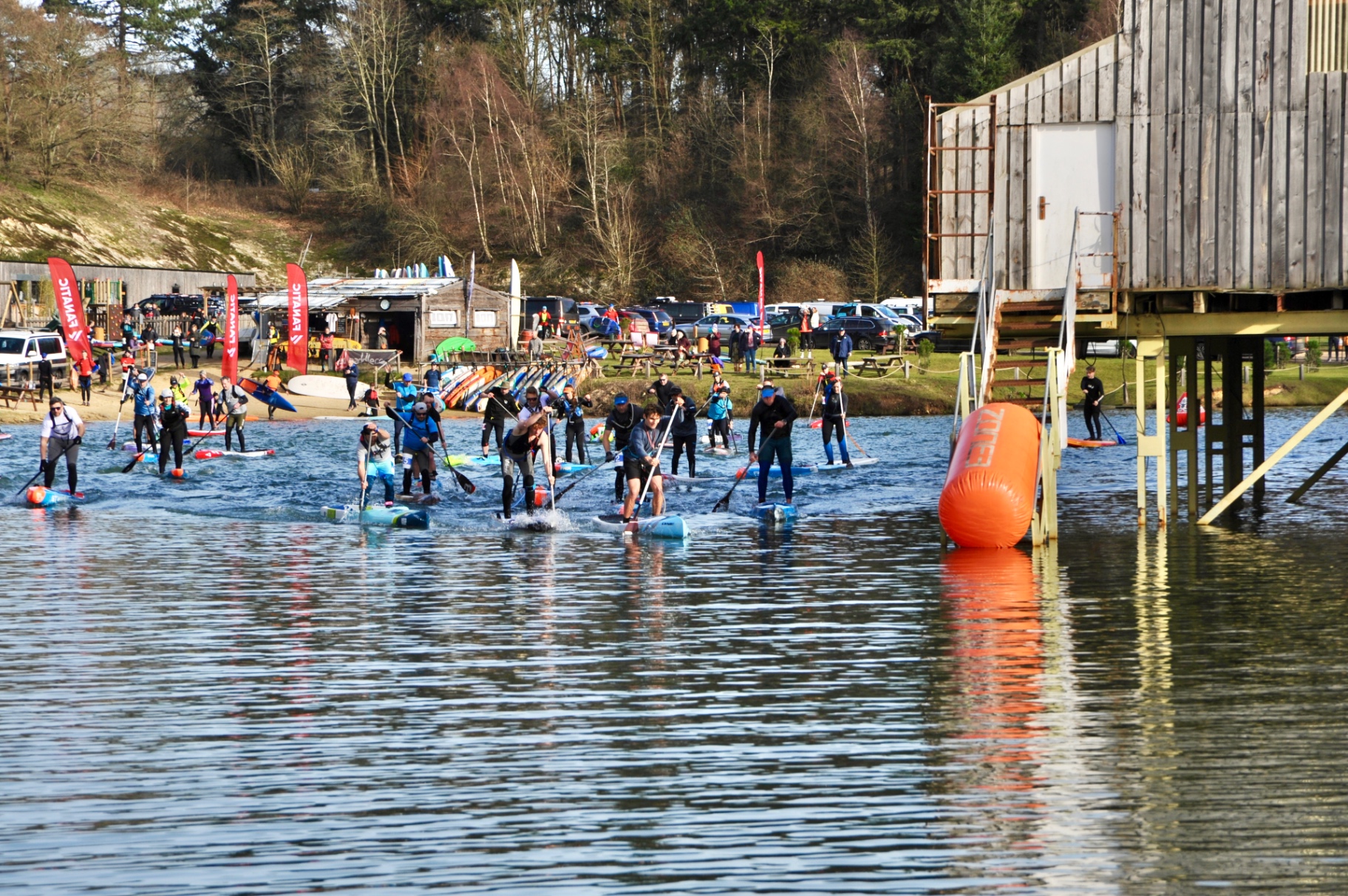
Skip and Craig Sawyer also brought GLAGLA to the UK, establishing the first UK GLAGLA at Buckland Park and developing it into a major winter paddleboarding event.
Other activities and technologies were explored over the years, including emerging watersports such as e-foiling. Not every experiment needed to become permanent. Some offerings were eventually simplified or removed as the operation matured.
The value was in maintaining the ability to test ideas, learn quickly and recognise what deserved to grow.
Archive footage
The Big Swim in practice
Section 11
Water safety beyond The SHAC
As the team's experience developed, The SHAC's water-safety capability began supporting activity beyond its own everyday sessions.
The SHAC provides water-safety support for the Reigate Tri Series, combining practical delivery with advice around how water-based elements should operate. The same capability has supported swim operations and course design for the Box Hill Tri, and consultancy and practical delivery support for SUP BIKE RUN — including mountain-bike route planning, safety input and training weekends.
When television, film or other production activity uses the lake, The SHAC's knowledge of the water and environment has also supported safe delivery. For Inside No. 9, The SHAC provided the location and water-safety support for filming involving the lake.
Skip has also worked in water-safety and advisory roles on a major Bollywood action production involving boats and complex activity around water.
The principle behind this work is straightforward:
Understand the water. Understand what the project is trying to achieve. Then build the safety operation around both.
That practical, environment-specific approach now informs SHACADEMY's work around water safety and operations and events and productions.
Section 12
From Base Camp to a substantial operation
Across its development, The SHAC worked with individuals, families, schools, charities, businesses, community organisations and major institutions.
That experience has included work with organisations such as:
- Surrey Young Carers
- Eton College
- Reigate Grammar School
- Box Hill School
- Commonwealth War Graves Commission
- Facebook / Meta
- Pfizer
Named as examples of organisations The SHAC and Skip have worked with. No endorsement is implied.
Over time, the tent on the beach became something the original idea could not have predicted. The SHAC developed into a substantial year-round outdoor and watersports operation.
The wider Buckland Park destination developed around it too, with investment in changing and visitor facilities, food and hospitality and the arrival of additional operators.
The SHAC itself became increasingly sophisticated. More participants. More staff. More systems. More activities. More responsibility. And inevitably, more complexity.
The small outdoor business had become a significant operation.
Fifteen years on, the thinking behind The SHAC has come full circle. Skip’s children, Ronnie and Betty, grew up spending a significant part of their childhood outdoors and around the development of the business. Today they are independent, resilient and adventurous young people — qualities Skip believes were shaped, in part, by those experiences. Both now work within The SHAC as instructors and leaders, helping other people access some of the same opportunities they grew up with.
Section 13
When the founder and the business need different things
Growth is often presented as an uncomplicated measure of success. The reality can be more nuanced.
The SHAC had grown far beyond the organisation Skip originally imagined creating. Eventually, the scale and demands of the business came at a significant personal cost. For his physical and mental wellbeing, Skip needed to step away from running it day to day.
He had also reached an important realisation.
The part of the journey he had originally set out to do was complete. The skills and energy required to imagine, create and develop something from almost nothing are not necessarily the same as those required to manage an increasingly large and complex mature organisation.
Julie Willard now leads The SHAC, supported by its operational team, continuing the business and community developed over many years.
For Skip, stepping back created space to return to the parts of the work that had always mattered most: people, places, ideas, nature, teaching and coaching, creative problem-solving, connecting specialists — and helping outdoor places and projects develop in ways that work for the people using them and the environments they depend upon.
Timeline
How it developed
2013
The Surrey Hills Adventure Company begins trading. Surrey Young Carers becomes the first paid project and Belmont provides the first Base Camp.
Early years
Belmont programmes, adventure trips, mountain biking and outdoor learning grow. SUP activity develops on the River Wey.
River Wey / Dapdune
The operation progresses from van-based delivery to a permanent paddleboarding base at Dapdune Wharf.
2017
Negotiations begin around the Buckland Park opportunity, and The SHAC begins operating at Buckland Park.
2018
First full operational summer at Buckland Park Lake — initially from a tent on the beach.
Following years
Year-round swimming, SUP, activity programmes, operational systems and infrastructure develop.
COVID period
River operations consolidate at Buckland. Public demand for outdoor activity, open-water swimming and paddleboarding accelerates.
2023
The first Big Swim is created as a deliberately non-competitive open-water challenge.
Today
The SHAC continues under Julie Willard's leadership. The experience gained through its development now forms part of the foundation behind SHACADEMY.
Section 14
What The SHAC taught us
More than a decade of building and developing The SHAC produced lessons extending far beyond one outdoor activity business.
- 01
Start with the experience you want people to have.
- 02
Safety should enable that experience, not overwhelm it.
- 03
Good operations are built around what actually happens on the ground.
- 04
Technology should support the operation, not dictate it.
- 05
Experimentation creates learning — including when ideas don't work.
- 06
Growth creates opportunity, but it also creates complexity.
- 07
Places can develop commercially without losing sight of people, environment and purpose.
- 08
The knowledge held by people closest to an operation is often as important as the information held in its systems.
Section 15
Why it matters to SHACADEMY
The SHAC and SHACADEMY are separate organisations. SHACADEMY does not retrospectively claim The SHAC's history as its own.
But the experience behind SHACADEMY was shaped significantly through Skip's experience founding, developing and learning from The SHAC.
Venue development. Outdoor operations. Water safety. Customer experience. Activity and product creation. Events. Technology. Training. Partnerships. Media and production. Growth. Mistakes. Change.
The experience of seeing all of those things interact inside a real operating organisation now informs how SHACADEMY approaches new problems.
SHACADEMY exists partly to make that learning useful elsewhere — together with Skip's wider experience and the knowledge of a growing specialist network.
Not by building another SHAC.
But by helping other people understand, improve and develop what is right for their organisation, project or place.
Related SHACADEMY areas
Where this experience is applied
Venue & Destination Development
Turning opportunities into practical, responsible and commercially workable outdoor places.
Explore →Water Safety & Operations
Building operational knowledge, proportionate safety and good decision-making into outdoor and water-based experiences.
Explore →Technology & Organisational Intelligence
Helping technology and systems reflect the reality and knowledge of the people and operations they support.
Explore →Training, Coaching & Development
Using practical experience and real-world learning to develop individuals, teams and organisations.
Explore →Schools and outdoor education work is covered on the Schools & Education pathway.
From experience to what comes next
What could this experience help you do better?
The SHAC remains an outdoor community and operating business in its own right.
The experience gained through building it now helps SHACADEMY ask a different question: what could those lessons help another organisation, project or place understand or do better?