
Venue & Destination Development Case Study
Belmont School — Where the Model Began
How an underused school woodland became an outdoor learning environment — and established a commercial and operational model that would follow Surrey Hills Adventure Company to future venues.
Before founding Surrey Hills Adventure Company (later widely known as The SHAC), Scott ‘Skip’ Innes was already working in outdoor activity and education — several years in Scouting, including around two years as a Scout leader, and coaching mountain biking in the Surrey Hills through another organisation.
That experience produced a firm view: outdoor environments develop things that are difficult to reproduce in highly controlled settings. Communication. Judgement. Confidence. Problem-solving. Practical skills. Teamwork. Appropriate risk-taking. The ability to make decisions as circumstances change.
There was also an emerging concern about balance — an increasingly digital childhood, set against direct experience of the physical world: nature, weather, consequence, other people, and an understanding of and respect for the environment.
Belmont School’s woodland was where those beliefs first had to work as an operating venue rather than an idea. The work described here was carried out by Surrey Hills Adventure Company. SHACADEMY is the present-day consultancy through which that experience is now applied.
At a glance
Place
Delivered by
Duration
Commercial model
Programme
Relevance to SHACADEMY
Chapter one
The opportunity
The Belmont opportunity began through a very personal conversation. When Skip left his previous business, the family spoke to Belmont School because they were uncertain whether they would be able to keep Skip’s children, Ronnie and Betty, at the school.
The Head asked Skip what he intended to do next.
Skip explained his plan to establish Surrey Hills Adventure Company and work directly with people through outdoor adventure, coaching and education.
Rather than the conversation ending there, the Head asked Skip to develop a business plan exploring whether Belmont’s woodland could become a base for the new venture. Skip developed the proposal and the school agreed. It became one of the first physical operating bases for Surrey Hills Adventure Company.
The venue already existed. What was missing was a proposition for how it could be used, and a commercial structure that made using it viable.
Chapter two
An early venue partnership model
The commercial structure matters as much as the activity.
Rather than simply renting the woodland for a conventional fixed fee, the arrangement was built around the venue participating through a percentage of the revenue generated by activity.
That aligned the interests of operator and landowner. Surrey Hills Adventure Company could develop activity without carrying a disproportionate fixed venue cost before demand existed, while Belmont participated commercially as use of its woodland grew.
The principles of this shared-upside approach subsequently influenced the organisation’s approach to other venues and partnerships — including the later National Trust river operation — and remain a recurring theme in venue development work today.
Chapter three
Building Base Camp
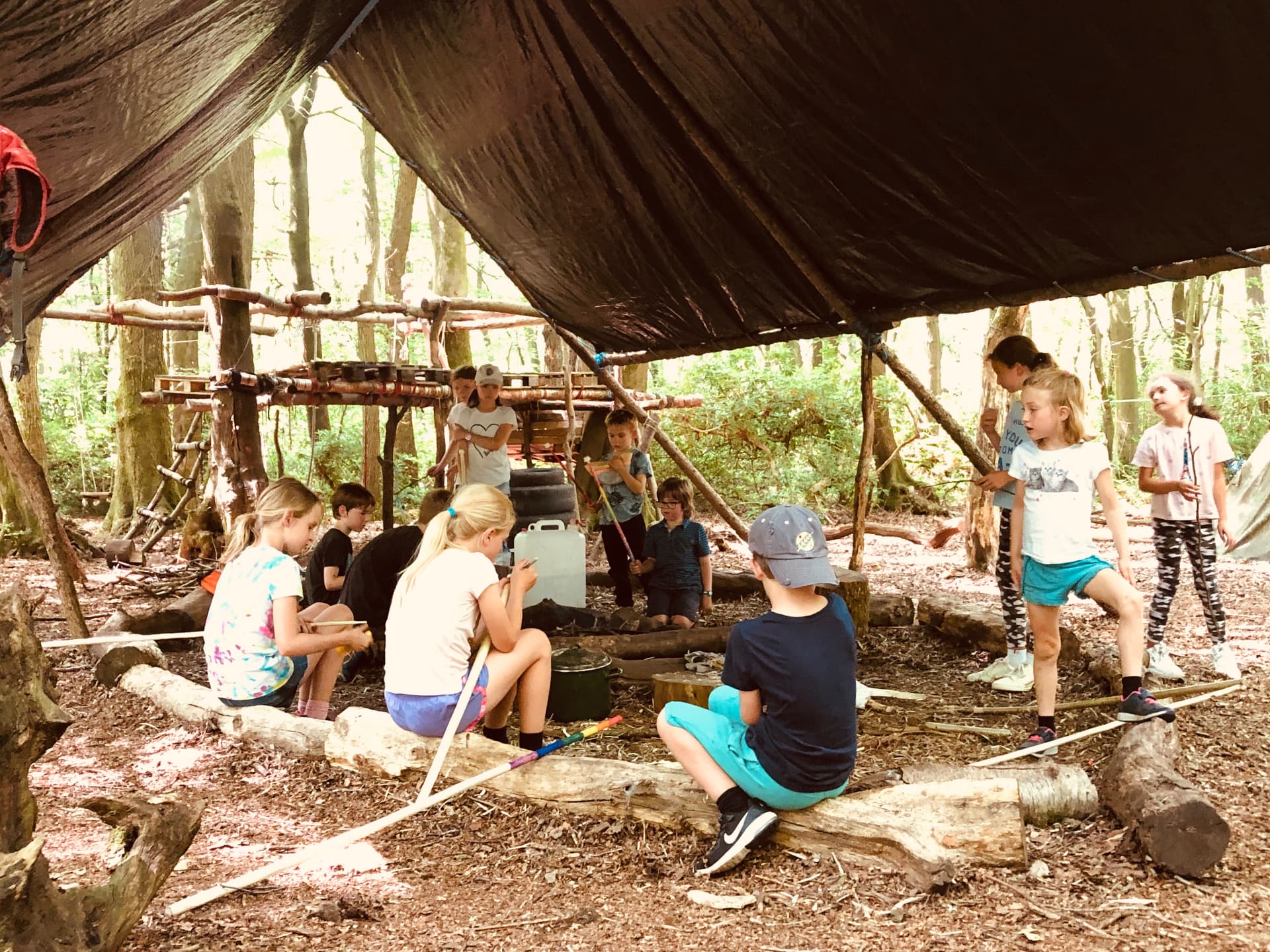
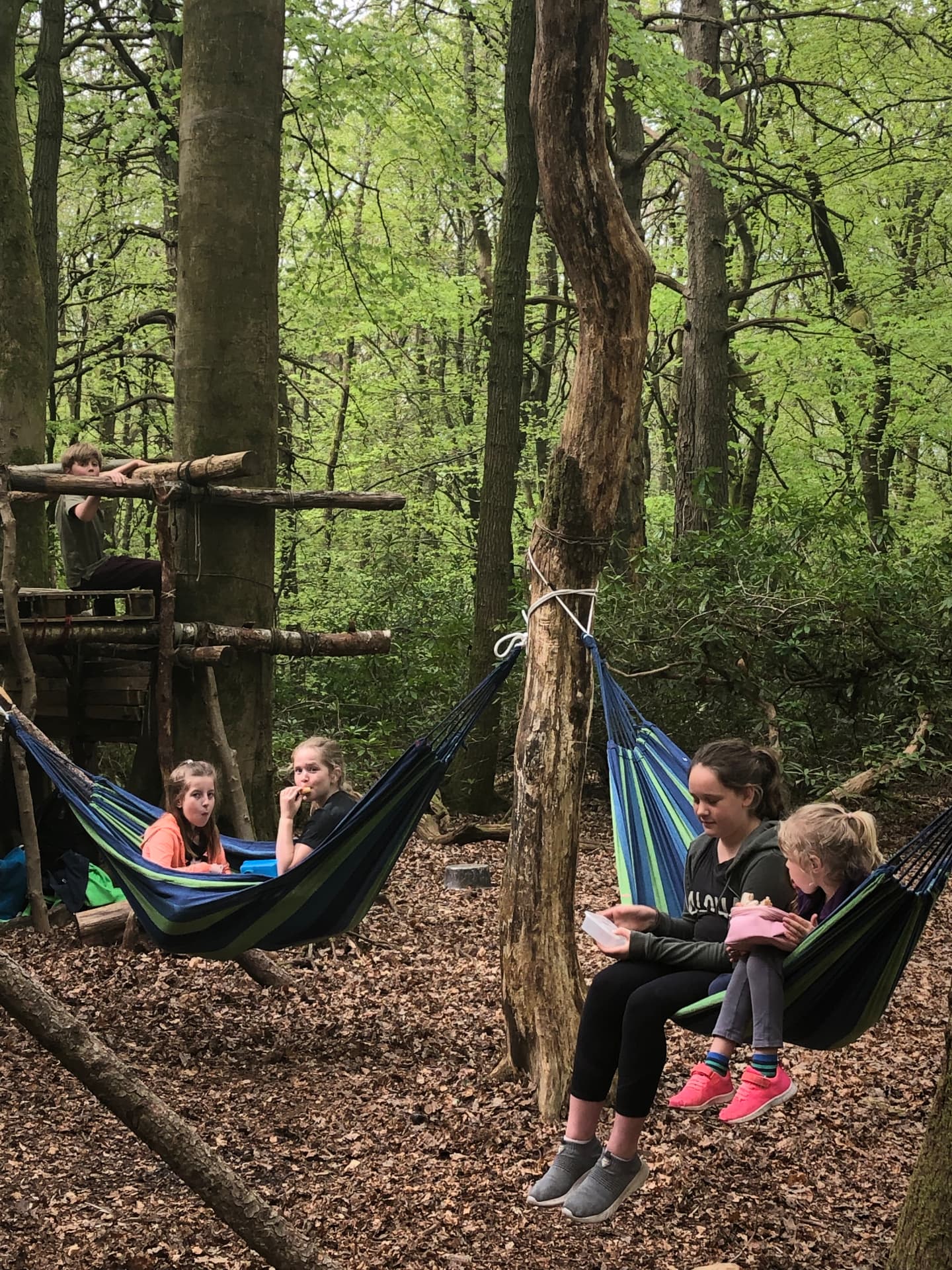
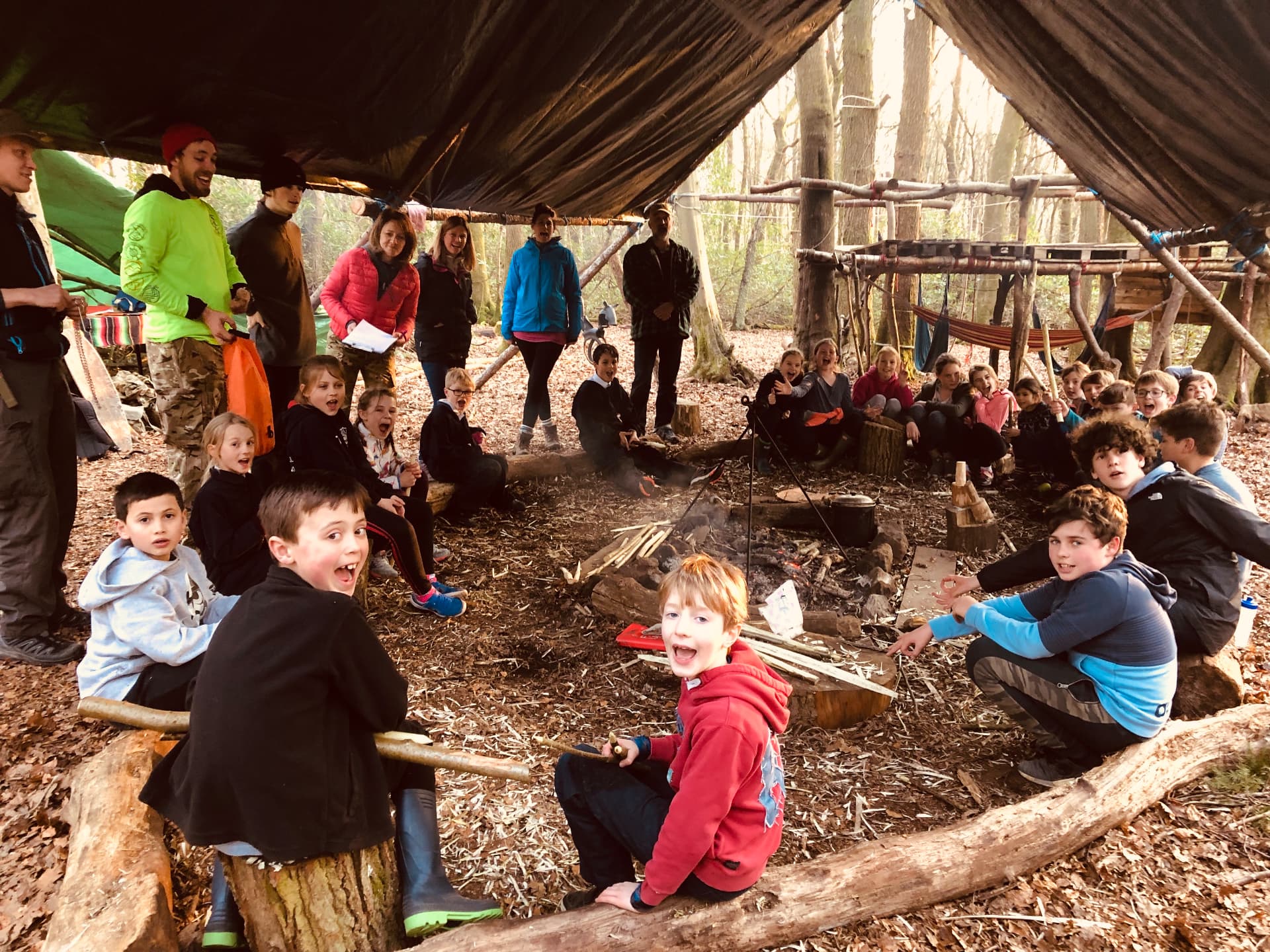
Skip personally led the physical creation of a woodland Base Camp: shelters, communal areas, fire areas, rope systems, rope swings, challenge elements, treehouse and platform structures, hammocks and other features created around the existing woodland rather than imposed upon it.
But an important part of the philosophy was that young people were not simply customers arriving at a finished outdoor activity centre.
They helped build it.
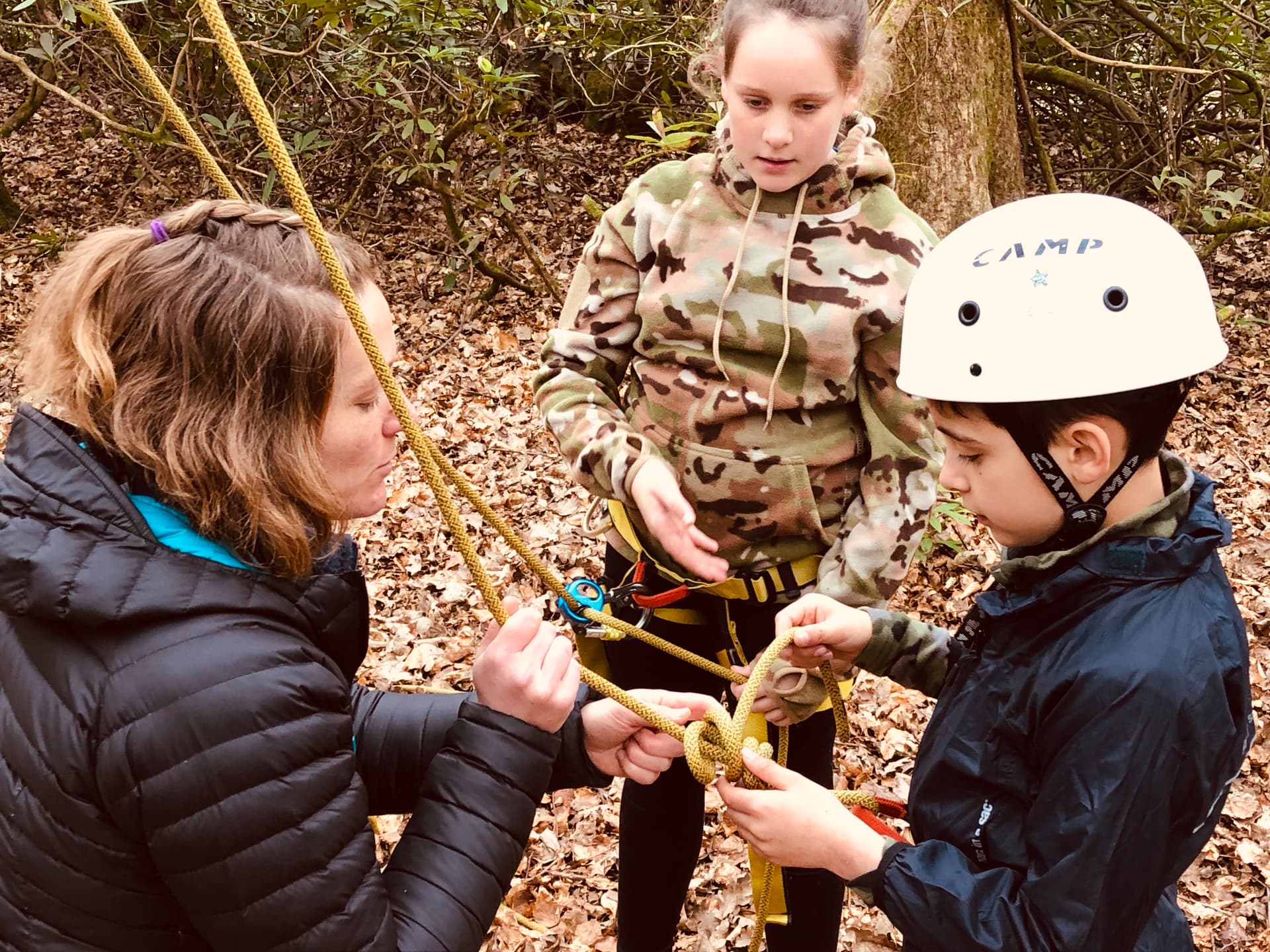
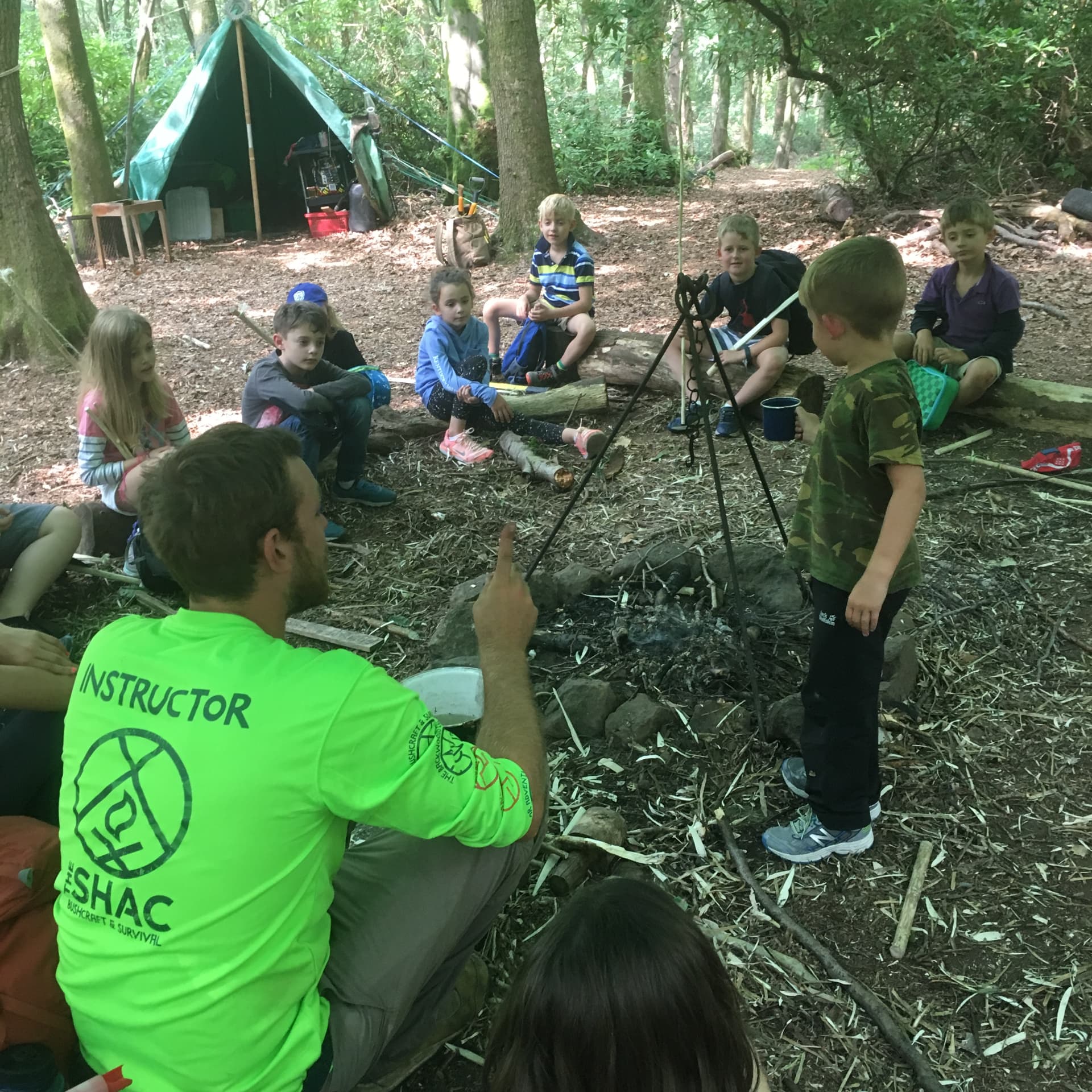
Under supervision, young people learned knots, rope work, construction, practical problem-solving and how to think through whether an idea would actually work. Creating Base Camp became part of the education itself.
Chapter four
Risk as part of learning
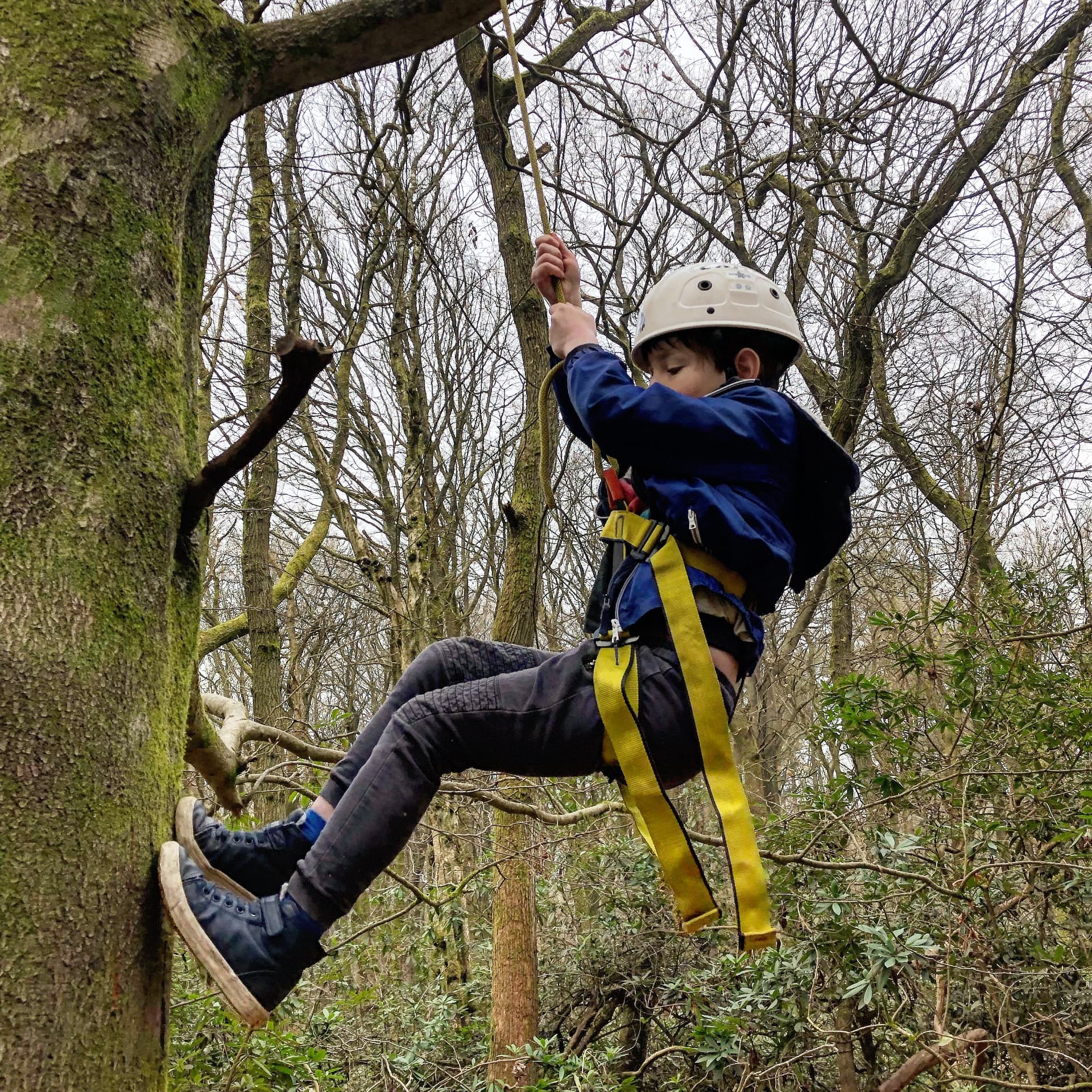
Risk was not uncontrolled. The principle was that appropriately managed exposure to challenge and uncertainty can be educational — and that designing every uncertainty out of an environment removes the learning with it.
Young people were given opportunities to:
- assess situations
- communicate
- solve practical problems
- work with other people
- make decisions
- learn practical skills
- understand consequence
- develop confidence
- experience appropriate risk
- connect with the natural environment
This was the working philosophy at the time, applied by practitioners on site. The modern vocabulary came later.
Archive footage
The programme in practice
Chapter five
The Backwoods Challenge
The flagship programme was organised around a deceptively simple question:
What do human beings actually need to survive?
Shelter. Food. Water. Warmth. Human company. Air. Those fundamentals provided the framework for a much broader outdoor learning experience.
Activities and learning incorporated:
- shelter building
- fire and cooking
- rope work and construction
- first aid
- environmental awareness
- safe practice and managed risk
- teamwork and communication
- creative, out-of-the-box thinking
- practical problem-solving
- respect for the natural environment
- fun
Environmental responsibility was not treated as a separate classroom topic. Young people were learning inside the woodland itself, and therefore learning that using a natural environment also means understanding, respecting and caring for it.
Chapter six
Balancing digital and real-world experience
Even at this stage, Skip believed that an increasingly digital world made meaningful real-world experience more important for young people, not less.
This was never an argument against technology. It was an argument for balance: digital experience alongside physical experience, human interaction, and connection with the natural world — nature, physical challenge, other people, uncertainty and consequence.
Chapter seven
A living learning environment
Base Camp was never installed fully formed. It evolved.
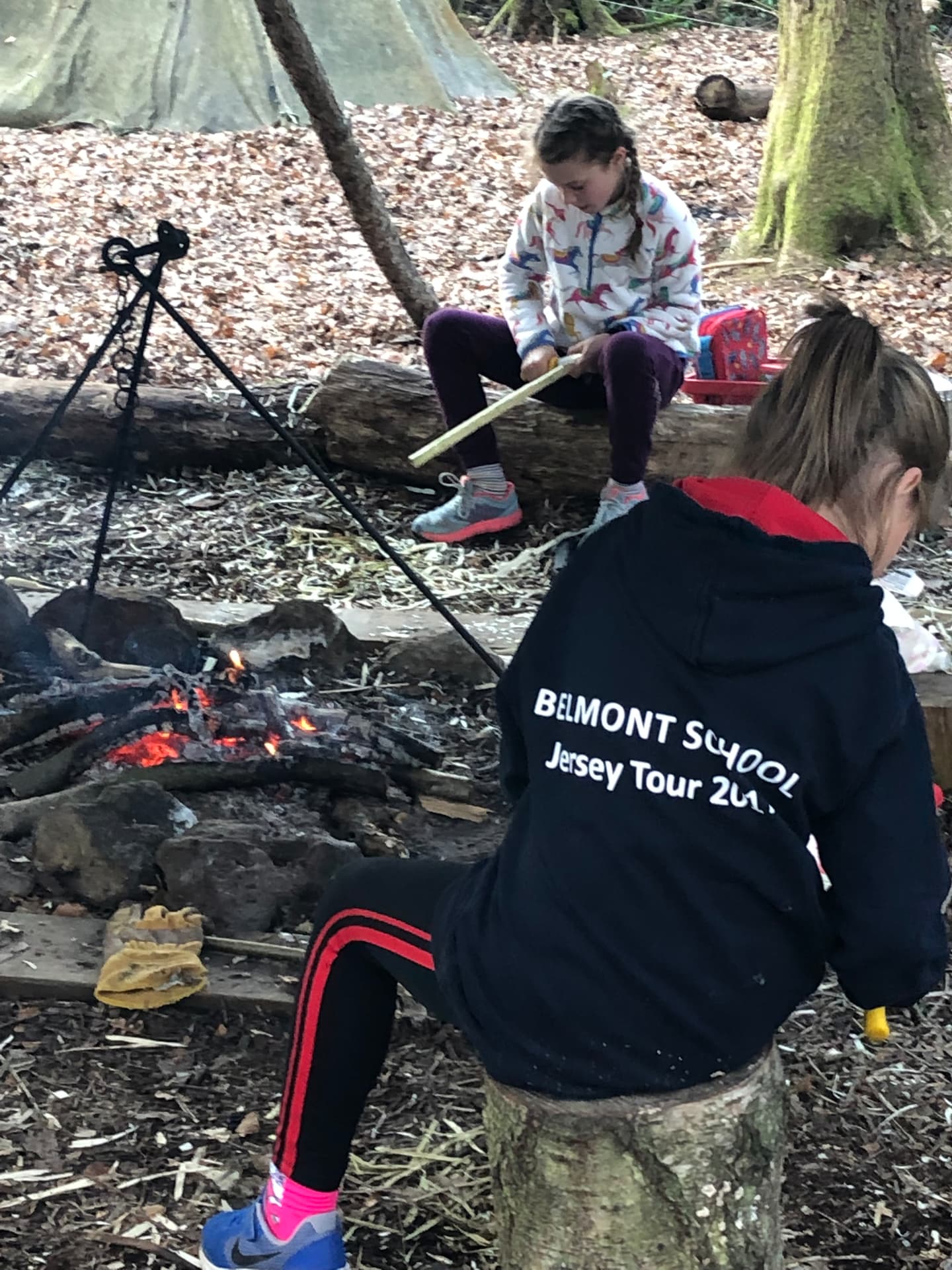
Children and young people participated in its development. Activities informed new structures and challenges. The woodland itself influenced what could realistically be created and where.
The venue, the programme and the participants therefore developed together — an approach that would influence later venue development work.
Chapter eight
The outcome
Surrey Hills Adventure Company operated from Belmont over a number of years. During that period the woodland became a genuine outdoor learning environment rather than simply a location in which activities happened.
The organisation’s growing operation at Buckland Park then became the primary focus of the business. Skip’s children moved on from Belmont, and the centre of gravity shifted towards the larger developing site. Belmont School subsequently closed.
Leaving Belmont was not a failure. The Belmont chapter had established the model; development had simply moved to a larger opportunity.
The model itself continued. It was replicated on a second Surrey estate at Birtley House, and later adapted again at Buckland Park through Viking Camp.
The legacy
The woodland was left behind. The model wasn’t.
Ideas first tested at Belmont carried into every operation that followed:
- identifying potential in underused places
- designing activity around the character of a venue
- aligning operator and landowner interests
- creating commercially sustainable activity
- environmental awareness and practical competence
- managed risk and experiential learning
- human interaction, communication and learning through doing
Many of the principles visible in SHACADEMY’s work today — environmental literacy, dynamic risk, practical competence, human factors and decision-making — can be traced through earlier operational work such as Belmont.
The terminology and the current framework came later. The underlying philosophy was already being tested in real environments, with real participants, and with real consequences.
What Belmont established
Five transferable lessons
Underused land is usually a proposition problem
The woodland already existed. What was missing was a clear proposal for how it could be used, by whom, and on what terms.
Align the commercial model with demand
A revenue share allowed activity to be developed before demand was proven, and rewarded the venue as use grew.
Let the place shape the programme
The trees, terrain and existing features determined what could be built and which activities made sense — not a standard template.
Participation builds competence
Involving young people in constructing the environment turned the venue build itself into the learning outcome.
Managed risk is a design decision
Challenge and uncertainty were deliberately retained and supervised, rather than removed to make delivery simpler.
Related case studies
Where the model went next
Birtley House
The Belmont woodland model deliberately replicated on a second Surrey estate, then adapted around its lake.
Read case study →Buckland Park Lake
The larger site that became the primary operation — phased activity, managed access and destination development.
Read case study →River Wey & River Mole
The same operator/landowner alignment applied to National Trust waterways, and a permanent base at Dapdune Wharf.
Read case study →Tapwood Lake
Opportunity identification and commercial modelling applied to an underused quarry lake.
Read case study →Related SHACADEMY areas
Where this experience applies
Start a conversation
Have you got land that isn’t working?
Woodland, water, fields, a quarry, a school site. Most underused places do not need major infrastructure to become useful — they need a realistic proposition and a commercial model that works for both sides.