Activity & Instructor Development Case Study
E-Foil — From Emerging Activity to Insured Operating Programme
How practical experimentation, progressive instruction, instructor development and operational controls turned an emerging watersport into a commercially deliverable activity.
Around 2021/22, e-foiling was still an emerging activity in the UK.
Scott ‘Skip’ Innes encountered the technology and immediately saw two things: it looked extraordinary, and The SHAC had access to the kind of water on which it could potentially be taught.
The challenge was that there was no established instructional pathway available to simply adopt. So Skip learned the activity himself.
Through experimentation, observation and repeated practice, he began to understand not simply how to ride an e-foil, but why it worked: weight distribution, power, board control, body position and the sequence through which a beginner could progressively gain control.
That learning became the foundation of an instructional programme.
Working with SHAC instructors Lizzie and Ashley, Skip developed the methodology into a repeatable customer journey and an internal instructor-development pathway. Operating controls and risk assessment were developed around it, the activity was presented to insurers, and The SHAC subsequently operated insured e-foil instruction at Buckland Park Lake. At a time when formal e-foil instruction was still emerging, this placed The SHAC among a very small number of UK operators offering structured e-foil instruction.
Over its operating life, approximately 150 people were taught.
Eventually the programme was withdrawn — not because it failed, but because its economics were weaker than other activities competing for the same instructor time. That final decision is as relevant to SHACADEMY as the innovation that began it.
The work described here was developed and delivered by Surrey Hills Adventure Company / The SHAC. SHACADEMY is the present-day consultancy through which the learning and experience from that work is now applied.
At a glance
Place
Delivered by
Lead development
Period
Activity
Equipment
Approximate participants
Development
Relevance to SHACADEMY
Chapter one
Spotting the opportunity
Skip first encountered e-foiling when the activity was still relatively unfamiliar.
For an outdoor activity business, its appeal was obvious. It was visually spectacular, genuinely different and capable of becoming a flagship experience.
The SHAC also had something particularly important: access to suitable open water at Buckland Park Lake.
Rather than treating e-foiling simply as equipment that customers could hire, Skip began exploring whether it could become a properly instructed commercial activity.
The opportunity wasn’t simply to buy an e-foil. It was to work out how to teach one.
Chapter two
Learning before teaching
There was no established programme available to The SHAC to copy.
Skip therefore learned through practice, observation, experimentation and repeated adjustment.
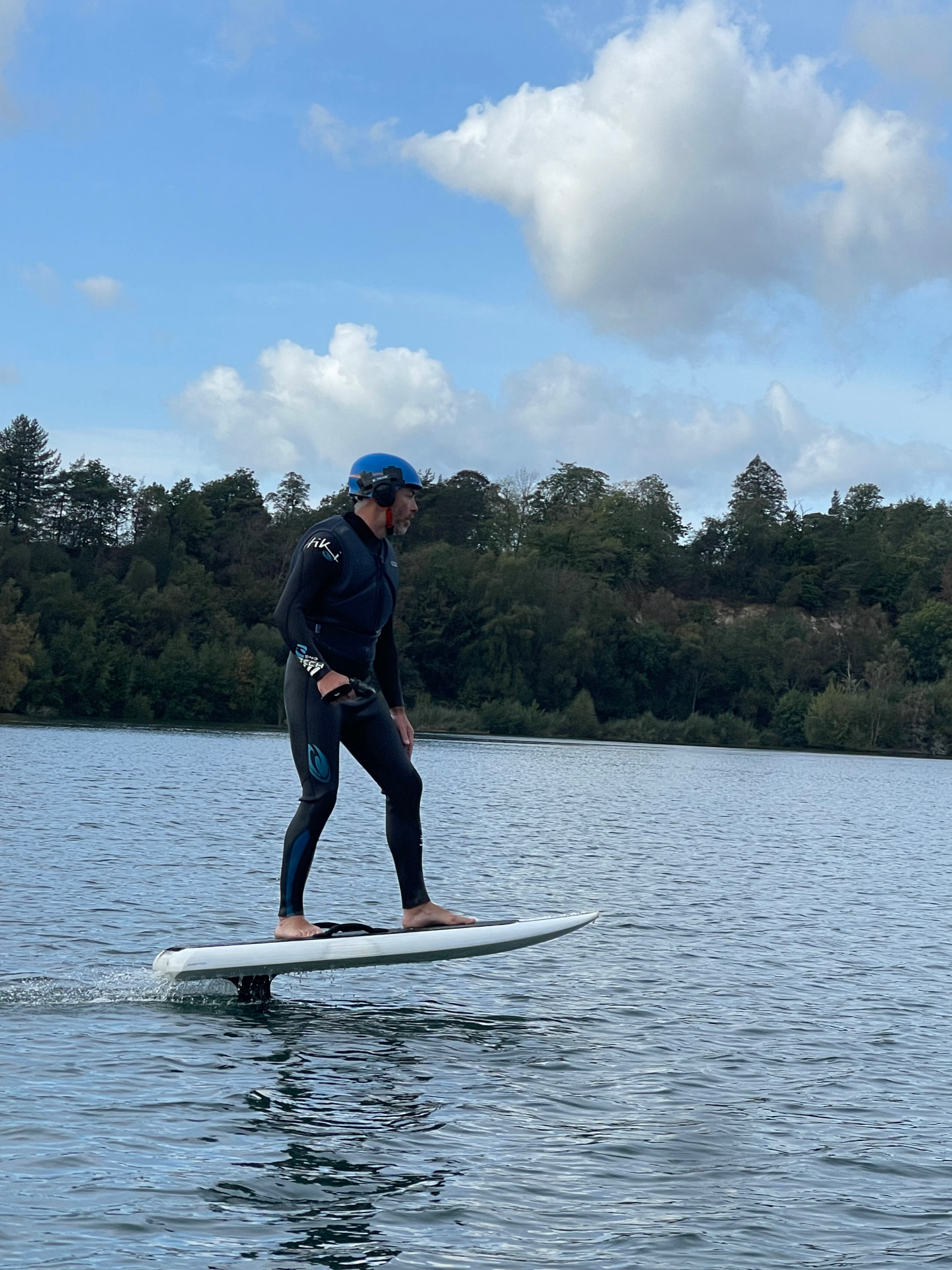
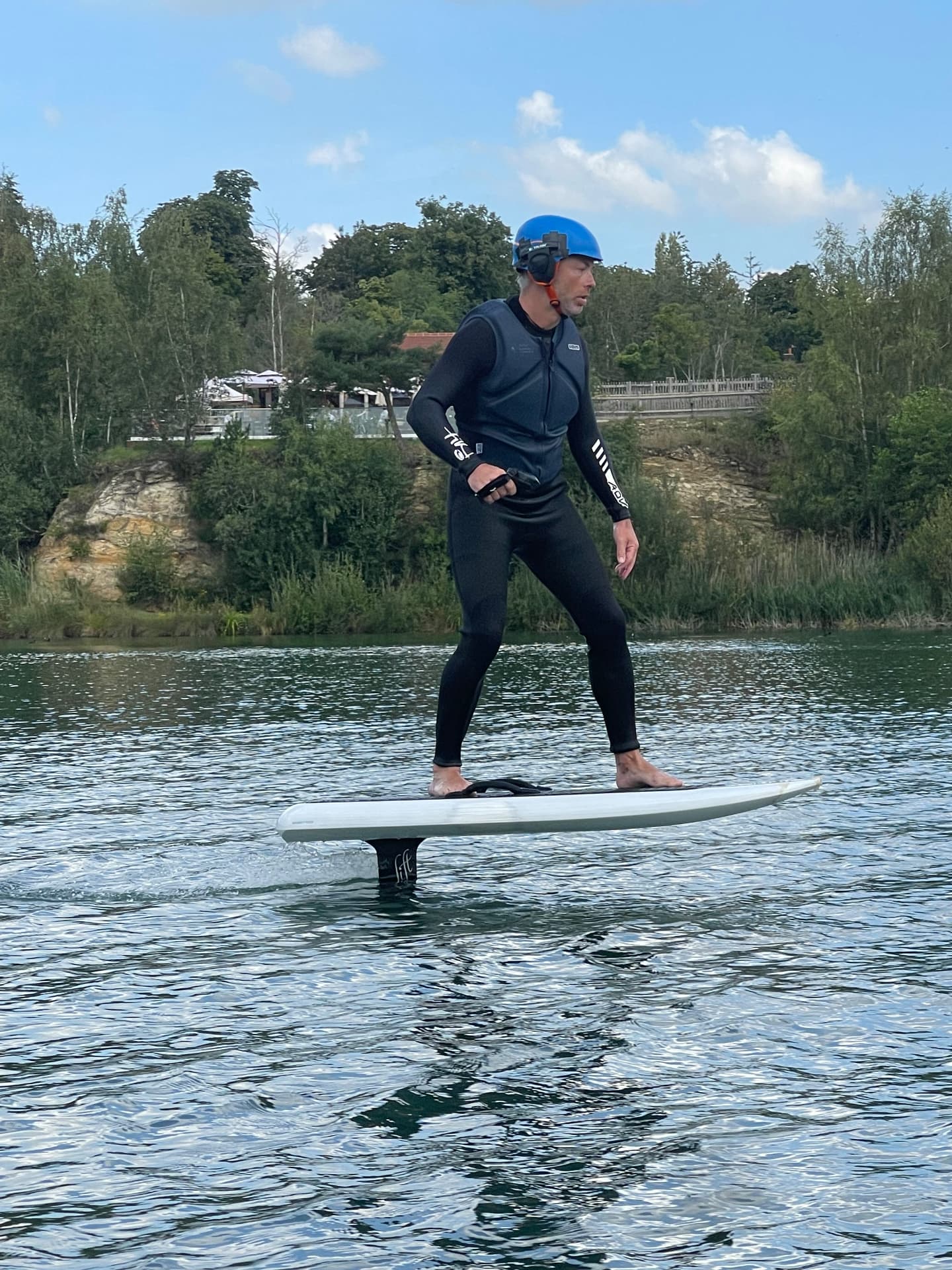
That process exposed something that became fundamental to the later teaching methodology: successful e-foiling was not simply about applying more power.
Weight distribution mattered enormously.
Small changes in body position affected the behaviour of the foil. Understanding those relationships made riding more controllable — and created a way of explaining the activity to somebody encountering it for the first time.
The process of learning the activity therefore became the research phase for designing the instruction.
Chapter three
Breaking the skill down
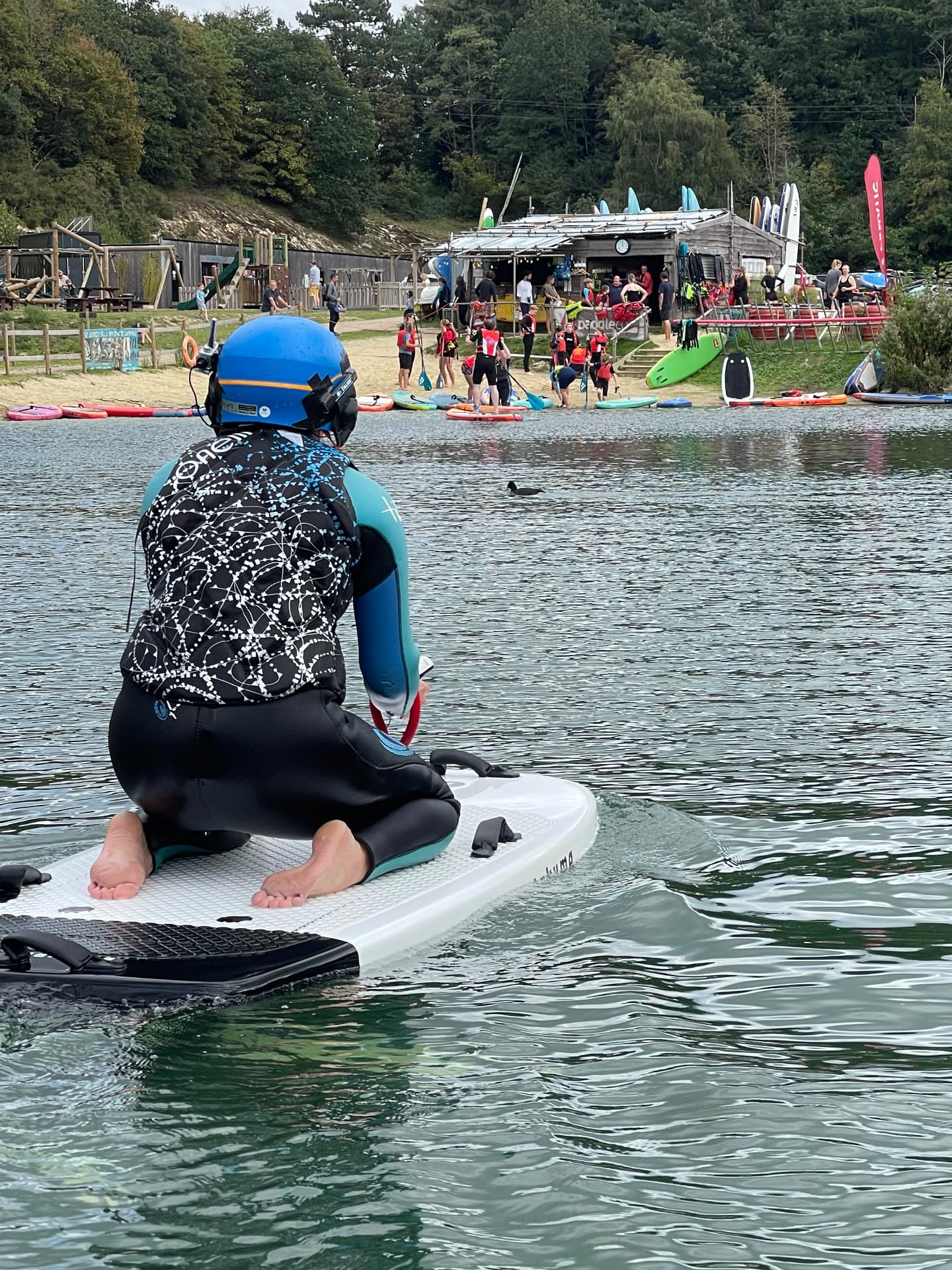
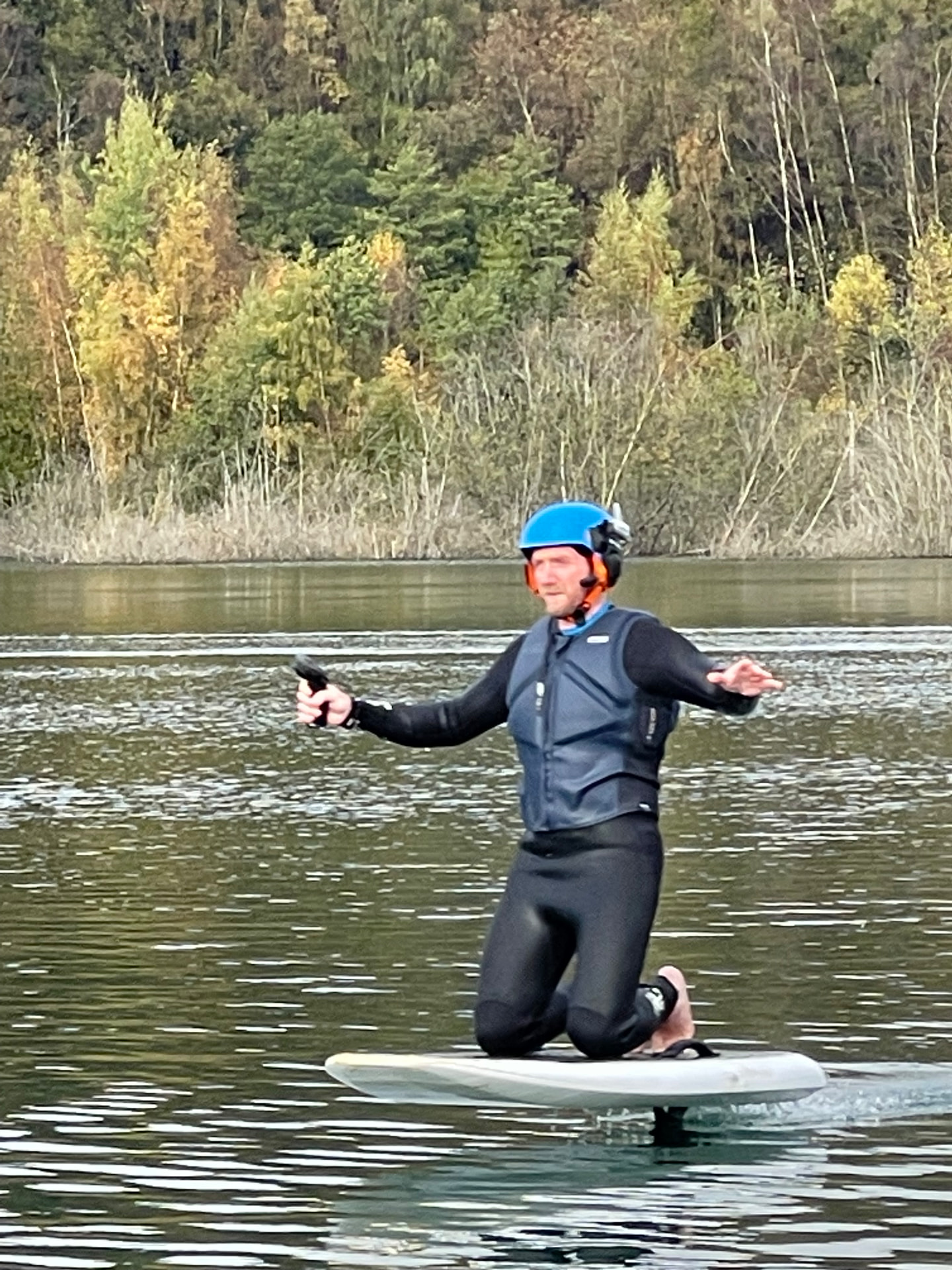
The programme deliberately avoided making standing and flying the first objective.
Participants could first learn control while remaining in lower, more stable positions — including prone and kneeling positions — before progressively moving towards standing.
This allowed riders to understand:
- throttle control
- board behaviour
- weight distribution
- balance
- direction
- how the foil responds
- how to fall safely
- when to progress
Complex performance was broken into smaller competencies.
The objective was not simply to get somebody flying as quickly as possible. It was to give them enough understanding and control for progression to make sense.
Chapter four
From rider to instructor
Being able to e-foil was only the first problem.
The next question was harder: how do you teach somebody else to do it consistently and safely?
Skip developed the programme further with SHAC instructors Lizzie and Ashley.
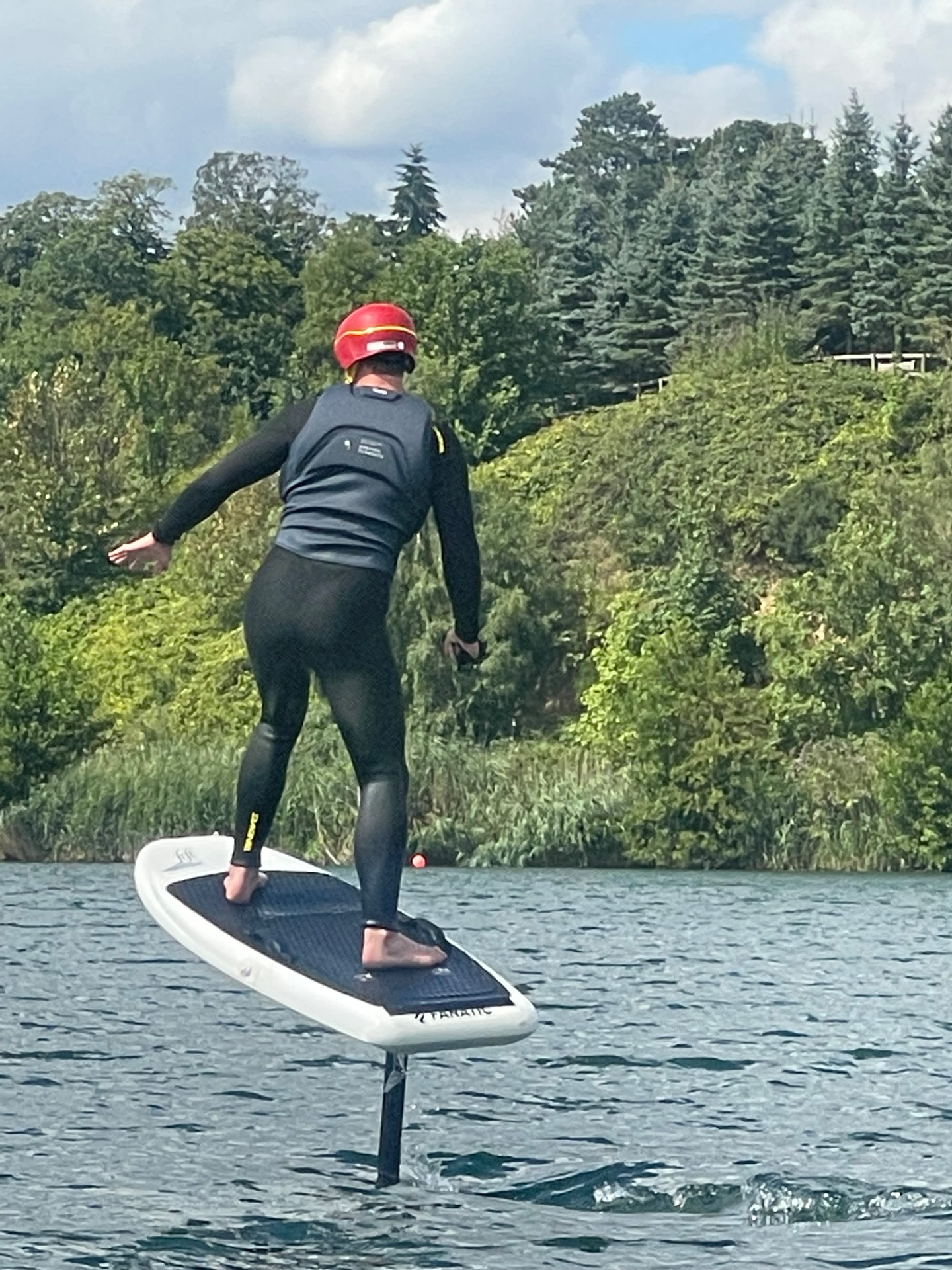
The practical learning was translated into a repeatable instructional sequence, with instructors required first to demonstrate their own competence and then demonstrate that they could communicate the right information to participants at the right stage of their progression.
Personal competence and instructional competence are not the same thing.
Chapter five
Building the operating system
Teaching methodology was only one part of making e-foiling commercially deliverable.
The SHAC also developed the operational controls around the activity. These included areas such as:
- participant briefing
- personal protective equipment
- defined operating areas
- weather assessment
- communications between instructor and participant
- safe-falling instruction
- rescue provision
- emergency arrangements
- equipment management
- instructor competence
The activity therefore developed as a complete operating proposition rather than simply a coaching session.
Surviving contemporary documentation includes a 2021 SHAC e-foil risk assessment and insurance documentation covering the activity. Those records are not reproduced here.
Archive footage
What controlled flight looked like
Chapter six
Making an emerging activity insurable
At the time, there was no established formal e-foil qualification pathway available to The SHAC. The organisation therefore needed to demonstrate how the activity would actually be delivered.
The teaching methodology, instructor requirements and operating controls were developed into a proposition that could be presented to insurers. The SHAC subsequently obtained insurance that included e-foil instruction.
This was an important transition.
An interesting new piece of equipment had become an organised, risk-managed and insurable commercial activity.
The significance here is the process rather than any claim to be first. Formal e-foil instruction was still emerging, and The SHAC was among a very small number of UK operators offering it in a structured form.
Chapter seven
Real-world delivery
The programme moved from development into normal customer delivery at Buckland Park Lake.
E-foil sessions were principally 1:1 because of the nature of the equipment, instruction and supervision.
Over the life of the programme, The SHAC estimates that approximately 150 people were taught to e-foil.
That repeated delivery also provided something that theoretical programme design cannot provide: feedback.
Instructors could see where people struggled, which explanations worked, where progression needed slowing down and how different participants responded to the equipment.
The programme could therefore continue evolving through delivery.
Chapter eight
The commercial question
Operational success did not automatically mean commercial success.
E-foils were expensive assets. Insurance added cost. Delivery was predominantly 1:1.
Most importantly, an instructor delivering one e-foil session could potentially have been delivering a paddleboarding session to a substantially larger group during the same period.
The programme generated revenue and was commercially viable, but increasingly struggled to justify the resources it consumed compared with other activities.
The relevant question is not simply “does this product make money?” It is also: “is this the best use of the people, assets, time and operating capacity available?”
Chapter nine
Knowing when to stop
Eventually The SHAC stopped offering e-foil instruction.
That decision should not be framed as programme failure.
The programme had achieved what it set out to do: an emerging activity had been learned, systemised, insured and successfully delivered to customers.
But the wider business had developed. Other products could use instructor time and operating capacity more effectively.
Innovation therefore required two different decisions: when to start something new — and when to stop doing it.
The legacy
The e-foils stopped. The operating learning didn’t.
The programme demonstrated a development process that now appears repeatedly in SHACADEMY’s work:
- observe an opportunity
- understand it practically
- identify what competent performance actually requires
- break that performance into teachable stages
- develop the people who will deliver it
- design risk and operating controls around it
- test it in real-world delivery
- review the evidence
- assess the commercial model
- adapt — or stop — when circumstances require it
The subject happened to be e-foiling.
The transferable capability was programme development.
What e-foil established
Five transferable lessons
Emerging activities need operating systems, not just enthusiasm
Interesting equipment does not become a viable activity simply because somebody can use it. Instruction, competence, risk, supervision and operations need to be designed around it.
Personal competence is not instructor competence
Doing something well and enabling another person to learn it are different capabilities. Instructor development needs to recognise that distinction.
Break complex skills into controlled progression
Lower-risk, understandable stages allow participants to develop control before attempting the final performance outcome.
Insurance and risk need to be designed into the product
For an emerging activity, insurability cannot simply be assumed. The delivery model needs to be understandable, controlled and defensible.
A product can work and still not be the right product
Revenue alone is not enough. Instructor utilisation, equipment cost, insurance, capacity and opportunity cost all influence whether an activity deserves to remain in an operating portfolio.
Related SHACADEMY areas
Where this experience applies
Programme & activity development
Turning expertise or emerging activity into structured, teachable and operationally deliverable programmes.
Explore →Operational systems & assurance
Connecting competence, risk, procedures and real-world delivery.
Explore →Instructor & team development
Developing people who can make good decisions rather than simply follow a script.
Explore →Venue & destination development
Understanding how activities, place, operating constraints and commercial opportunity fit together.
Explore →Related case studies
Where the thinking connects
Skills in the Hills
Progressive mountain-bike instruction using terrain, judgement and real-world decision-making.
Read case study →Buckland Park Lake
The larger operating environment in which multiple activities and operating systems were developed.
Read case study →Belmont School woodland
Early programme and venue development through experiential learning.
Read case study →Start a conversation
Got an activity that doesn’t yet have the system around it?
A good idea, specialist skill or emerging activity is only the beginning.
SHACADEMY helps organisations understand what competent delivery requires — from instruction and operating controls to people, risk, commercial viability and continuous improvement.