Coaching, Competence & Outdoor Learning Case Study
Skills in the Hills — Teaching Riders to Think, Not Just Ride
How a mountain-bike development programme in the Surrey Hills used progressive terrain to develop technique, judgement and independent decision-making.
Before Surrey Hills Adventure Company became associated with water, paddleboarding, swimming and larger outdoor venues, mountain biking was an important part of its early work.
Scott ‘Skip’ Innes had already been coaching mountain biking in the Surrey Hills through another organisation. When he established Surrey Hills Adventure Company, he developed his own programme and methodology.
Skills in the Hills began around 2012 and ran for approximately four years. Initially designed as a mountain-bike development programme principally for young people aged around 8–16, its underlying methodology subsequently informed coaching with adults, families, schools, groups, guided rides and other riders.
The objective was not simply to make somebody better at riding a mountain bike. It was to help them understand what they were doing, why they were doing it, and how to make good decisions for themselves when the environment changed.
The work described here was designed and delivered by Surrey Hills Adventure Company. SHACADEMY is the present-day consultancy through which experience and principles developed through work such as this are now applied.
At a glance
Place
Delivered by
Period
Programme
Core audience
Delivery
Core approach
Relevance to SHACADEMY
Chapter one
A programme, not just a ride
Skills in the Hills was created by Skip as a structured mountain-bike development programme.
The distinction mattered.
Taking somebody mountain biking and teaching somebody to become a mountain biker are not necessarily the same thing. A guided ride can show somebody where to go. A coaching programme should progressively give them the skills, understanding and judgement to make increasingly good decisions without the coach making every decision for them.
Skills in the Hills therefore combined technical riding skills with preparation, trail awareness, risk, decision-making and understanding the outdoor environment.
The aim wasn’t just to teach someone how to ride a trail. It was to help them understand how to make good decisions when the trail changed.
Chapter two
Before the trail
Mountain-bike competence started before anyone reached the interesting terrain.
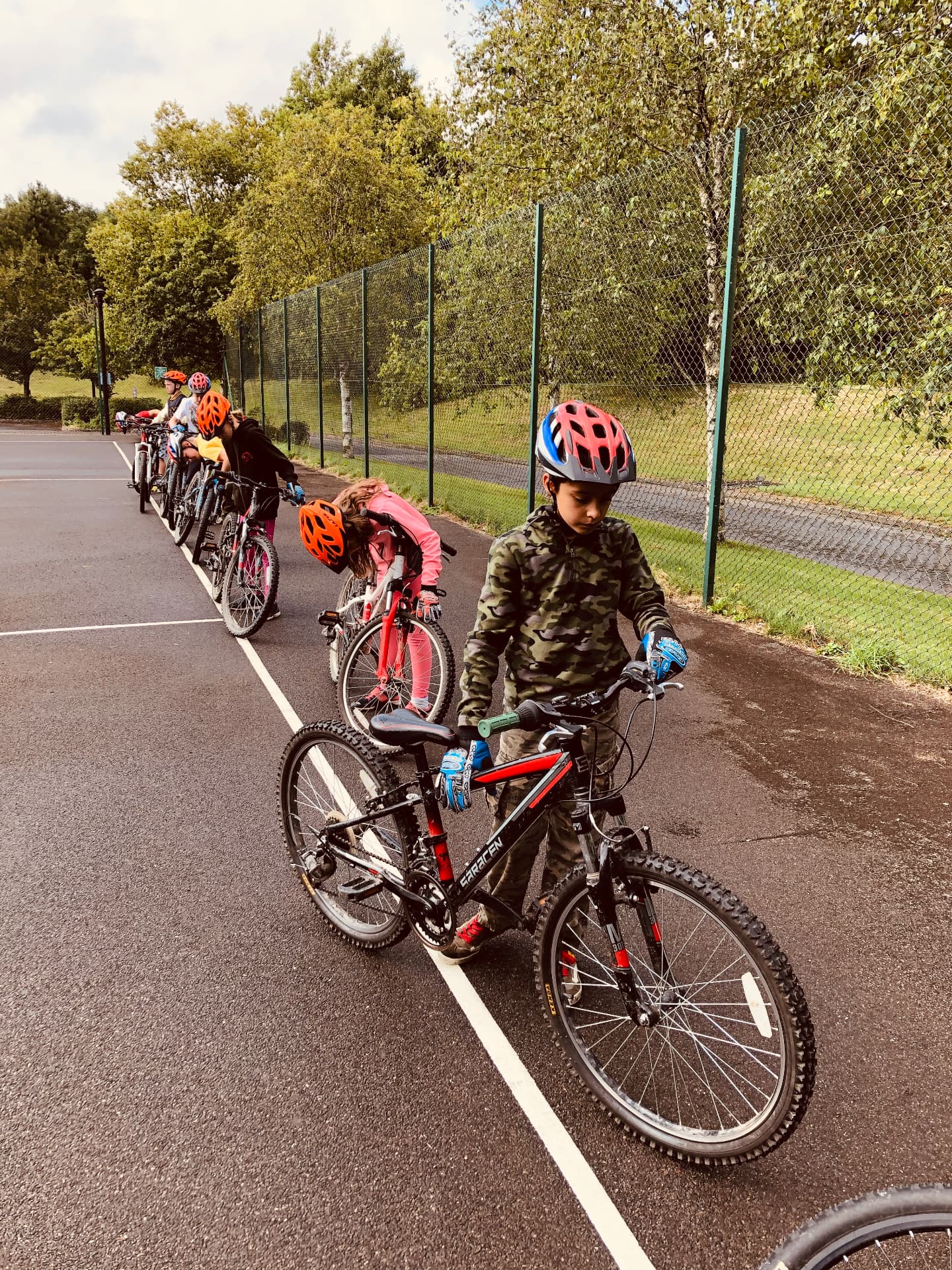
Riders learned practical habits around preparing themselves and their equipment before heading into the hills. That included:
- basic bike safety checks
- understanding whether the bike was suitable and working correctly
- thinking about where they were going
- telling somebody where they intended to ride
- considering who they were riding with
- having an expected return time
- understanding what to do if something went wrong
- recognising that riding away from roads and facilities creates additional responsibility
For younger riders these ideas were communicated in practical, understandable ways rather than presented as formal risk-management theory.
The principle was simple: enjoying greater independence outdoors also means learning to take greater responsibility for yourself and the people around you.
Chapter three
Build the skill
The technical programme developed the fundamentals needed to control a mountain bike properly.
- body position
- balance
- effective braking
- using both brakes appropriately
- squeezing rather than grabbing the brakes
- climbing
- descending
- cornering
- line choice
- reading the trail
- responding to changing surfaces and gradients
- controlling speed
- understanding what the bike is doing beneath the rider
- responding appropriately when things do not go to plan
Importantly, riders were not simply told what to do. The coaching sought to explain why a technique worked.
Understanding the reason behind a movement or decision made it easier for the rider to recognise when that technique might be useful somewhere else.
Chapter four
Let the hills teach
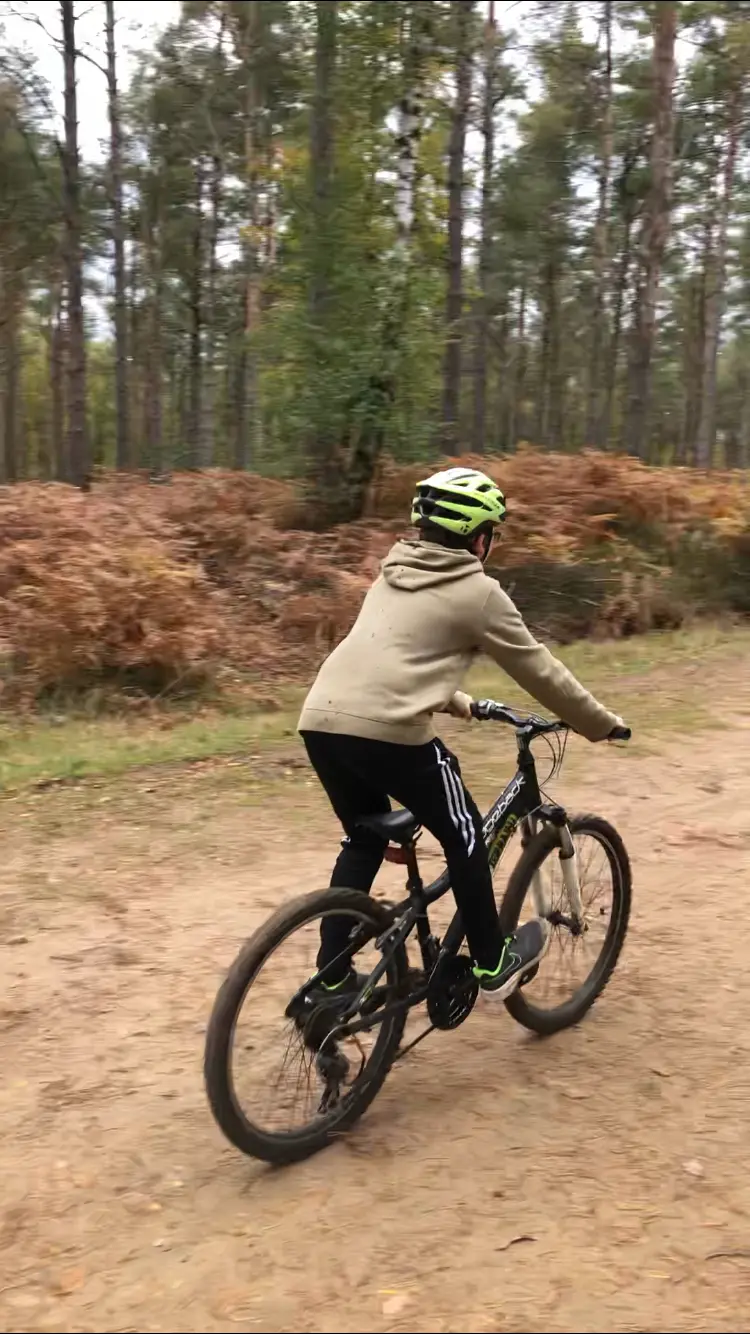
Skills were initially introduced in relatively controlled terrain.
A rider might learn braking, body position, balance or line choice on a gentle section of fire road where there was enough space to concentrate on the technique.
Then the environment changed.
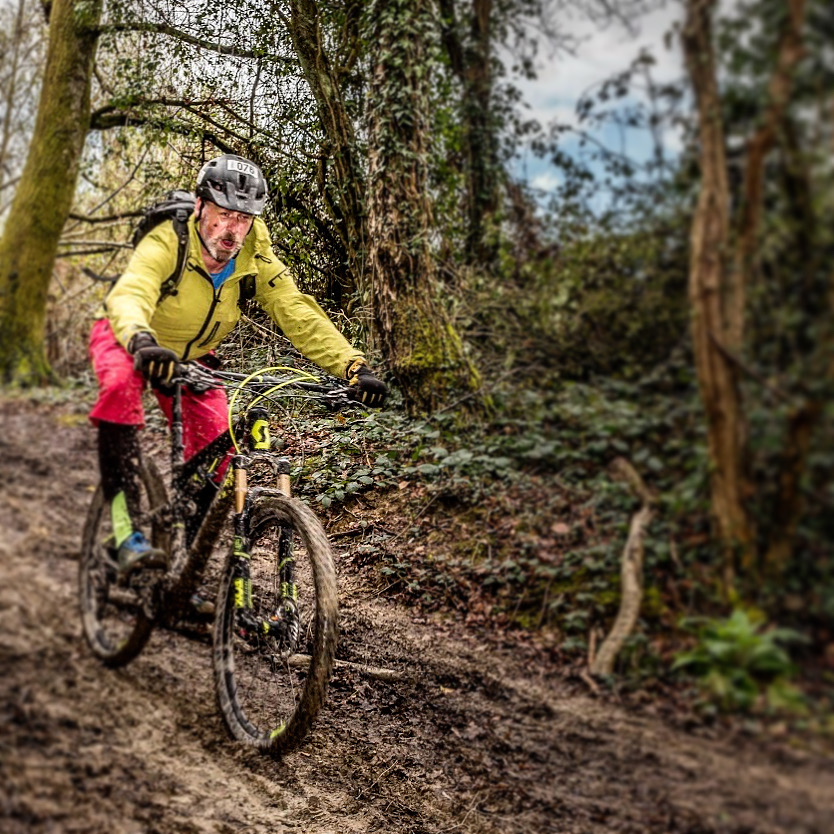
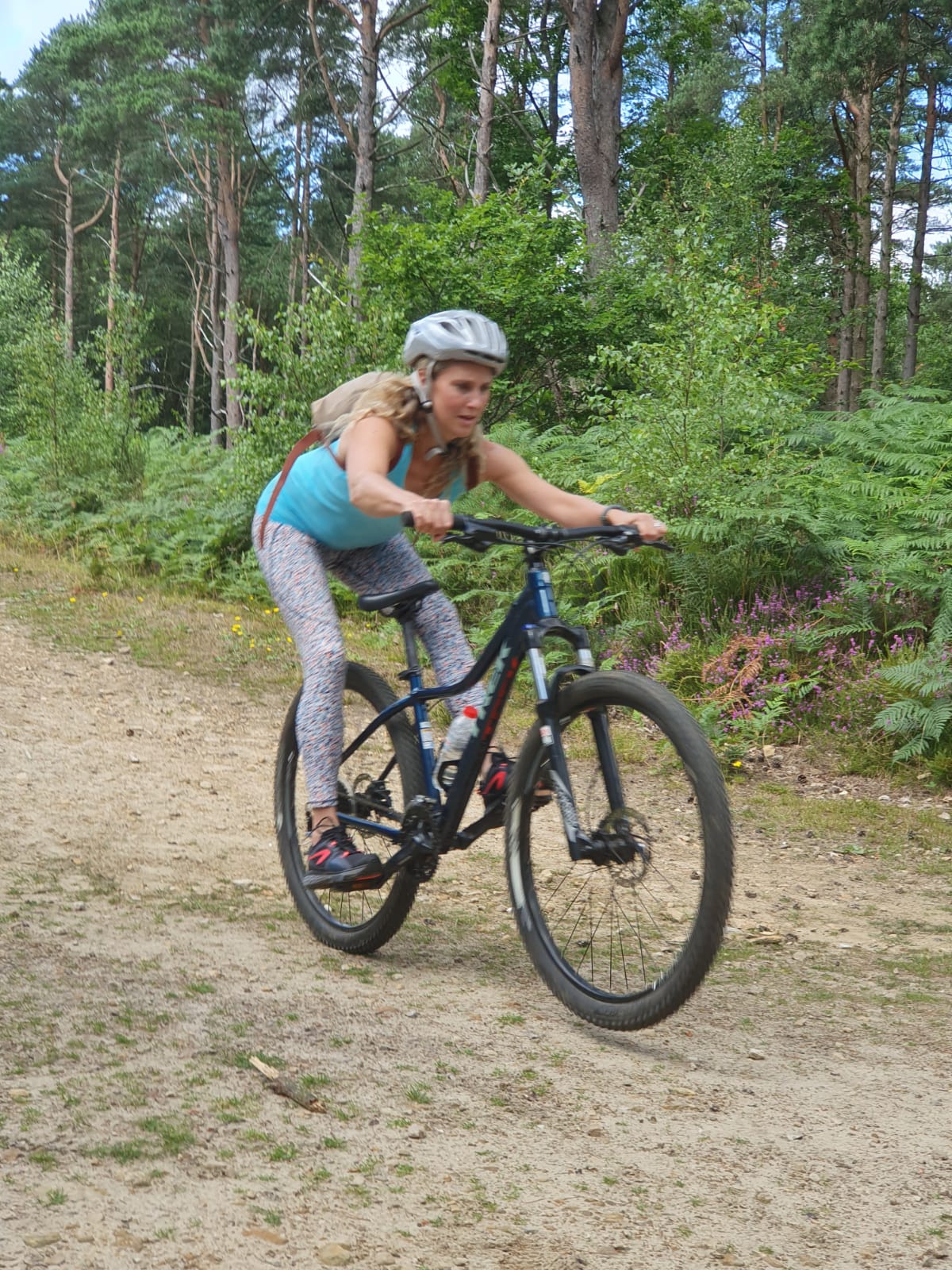
The same rider would take those skills onto a straightforward piece of singletrack. Now there were corners. Gradient. Different surfaces. Roots. Narrower lines. Changing grip. Obstacles. Other decisions.
The coach had not necessarily introduced a completely new technical skill. The terrain had introduced a new problem.
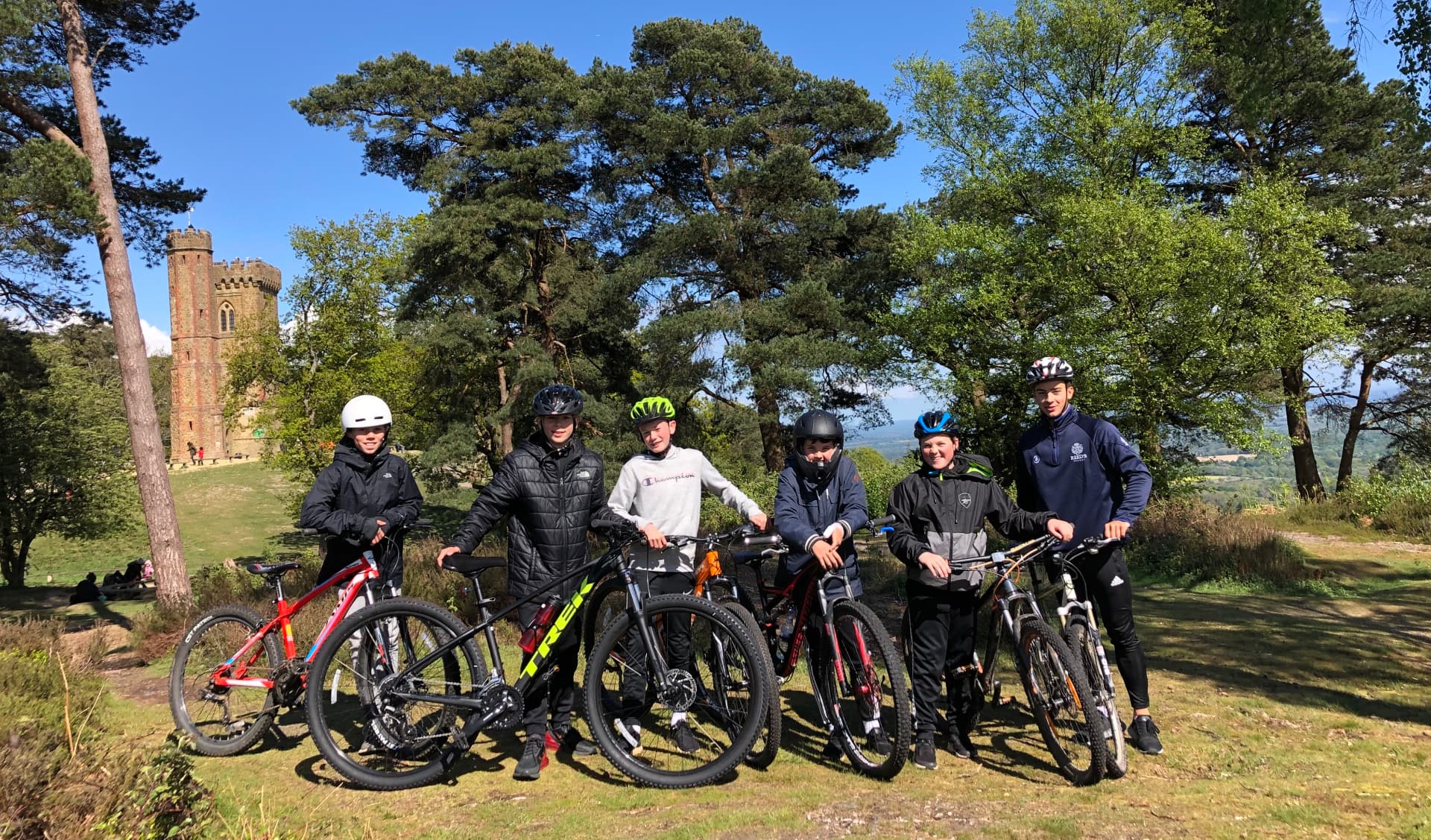
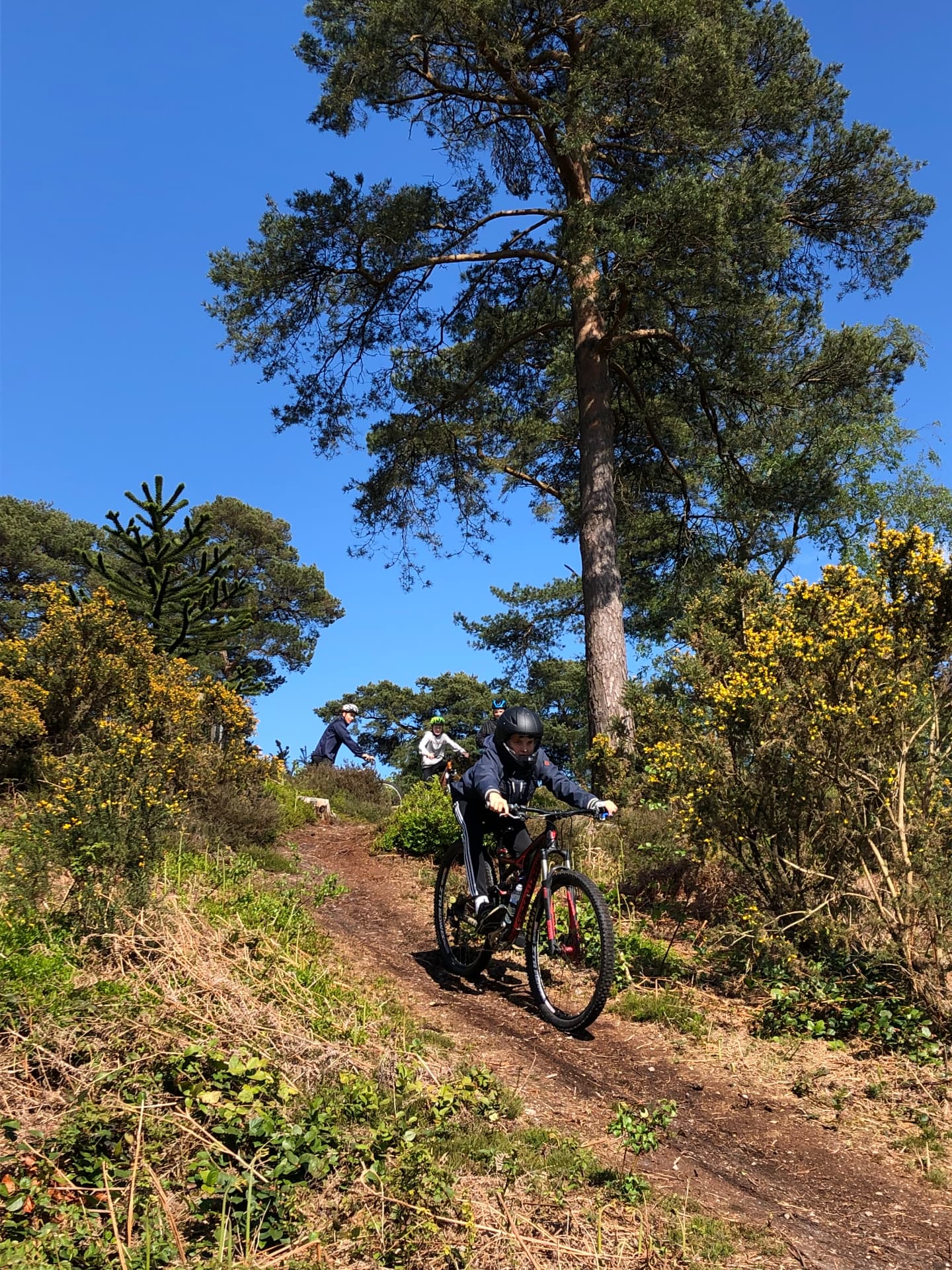
As competence developed, riders progressed onto increasingly complex sections of trail around Leith Hill and Holmbury Hill. The hills became part of the teaching system.
A good coach could select terrain that created the next appropriate challenge and allow the rider to discover how and when the skills they had already learned needed to be applied.
Learn the skill. Understand why it works. Then let the environment teach you when to use it.
Chapter five
From technique to judgement
Knowing how to brake is a technical skill.
Recognising when to brake, how much braking is required, what the surface will allow, what happens after the corner and whether the rider has enough control to continue is judgement.
That distinction became central to the programme. The intention was progressively to reduce the rider’s dependence on the coach. Rather than constantly providing the answer, coaching could ask:
- What can you see?
- Where would you position yourself?
- Where would you brake?
- Which line would you choose?
- What changes if the ground is wet?
- What happens after this section?
- Is this within your ability today?
The rider therefore became increasingly responsible for interpreting the environment and making decisions.
The bike was the activity. Decision-making was the transferable skill.
Chapter six
Progression, not performance
Many riders initially booked a single session and subsequently returned for progression sessions. That allowed coaching to develop over time.
A skill learned on relatively simple terrain could be revisited on straightforward singletrack and later tested in more complex terrain.
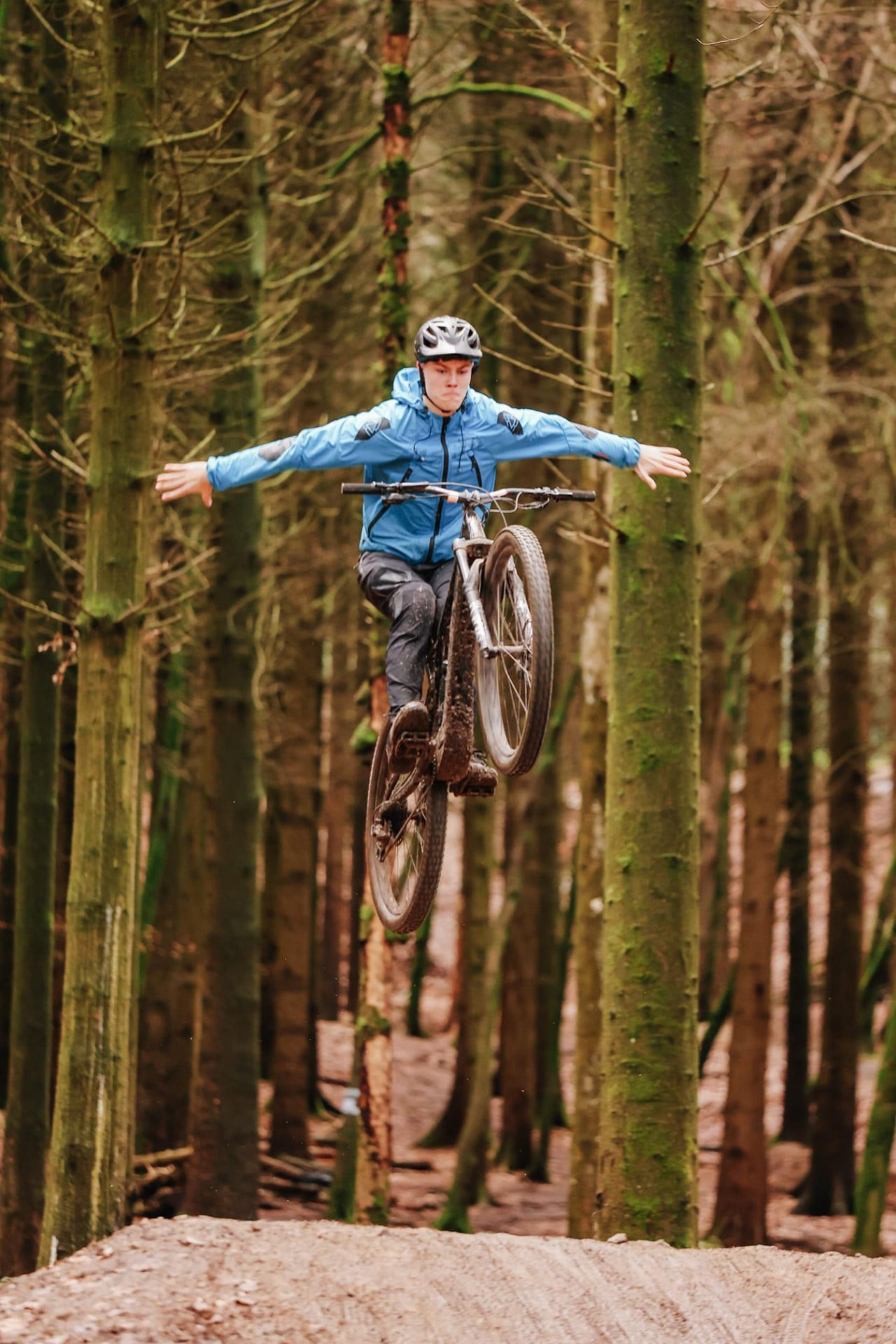
Progression did not simply mean riding faster, jumping higher or tackling increasingly difficult trails. It meant developing greater competence and independence.
The coach could progressively introduce more environmental complexity while maintaining an appropriate relationship between challenge and the rider’s ability.
Chapter seven
One methodology, different riders
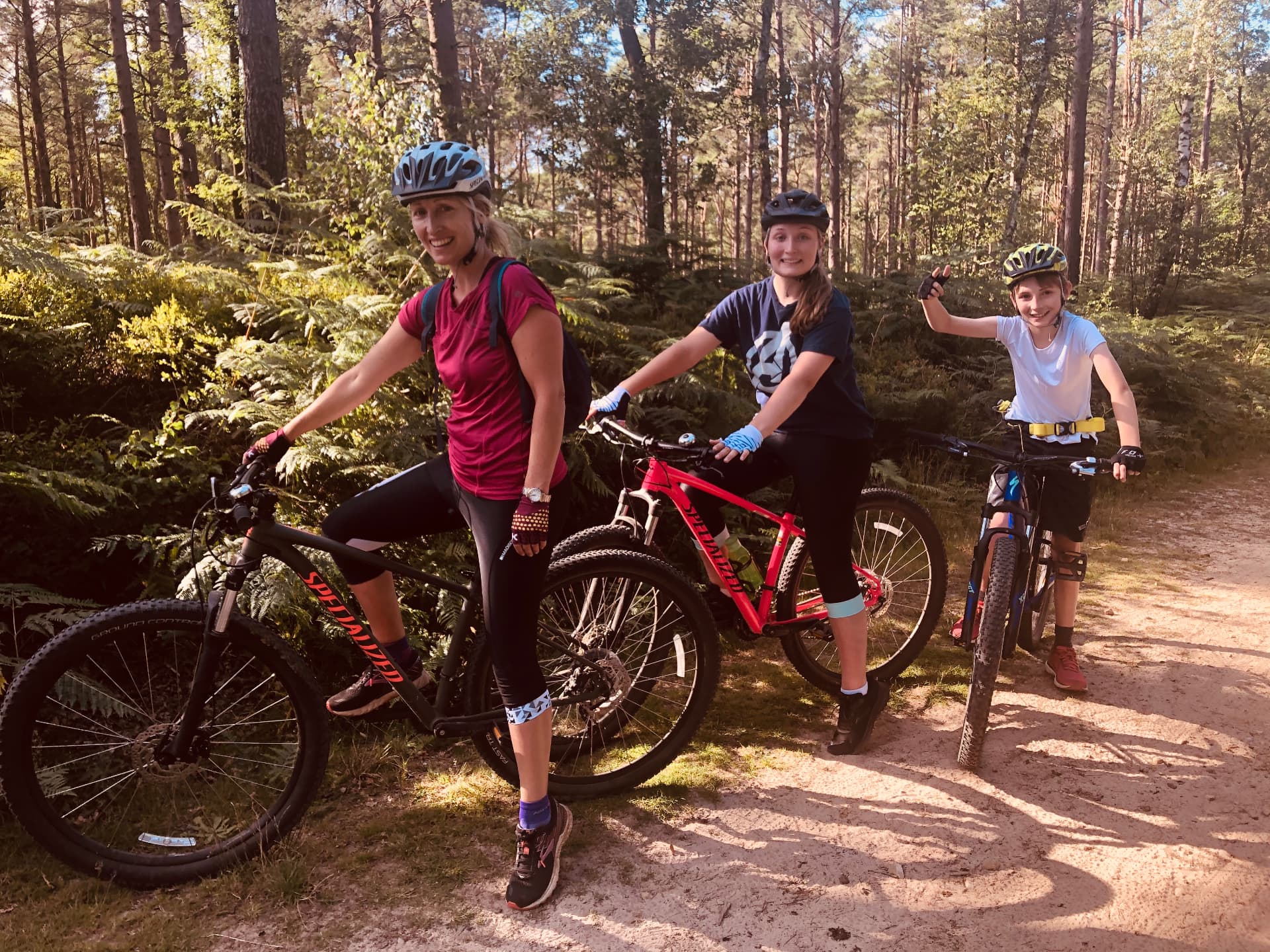
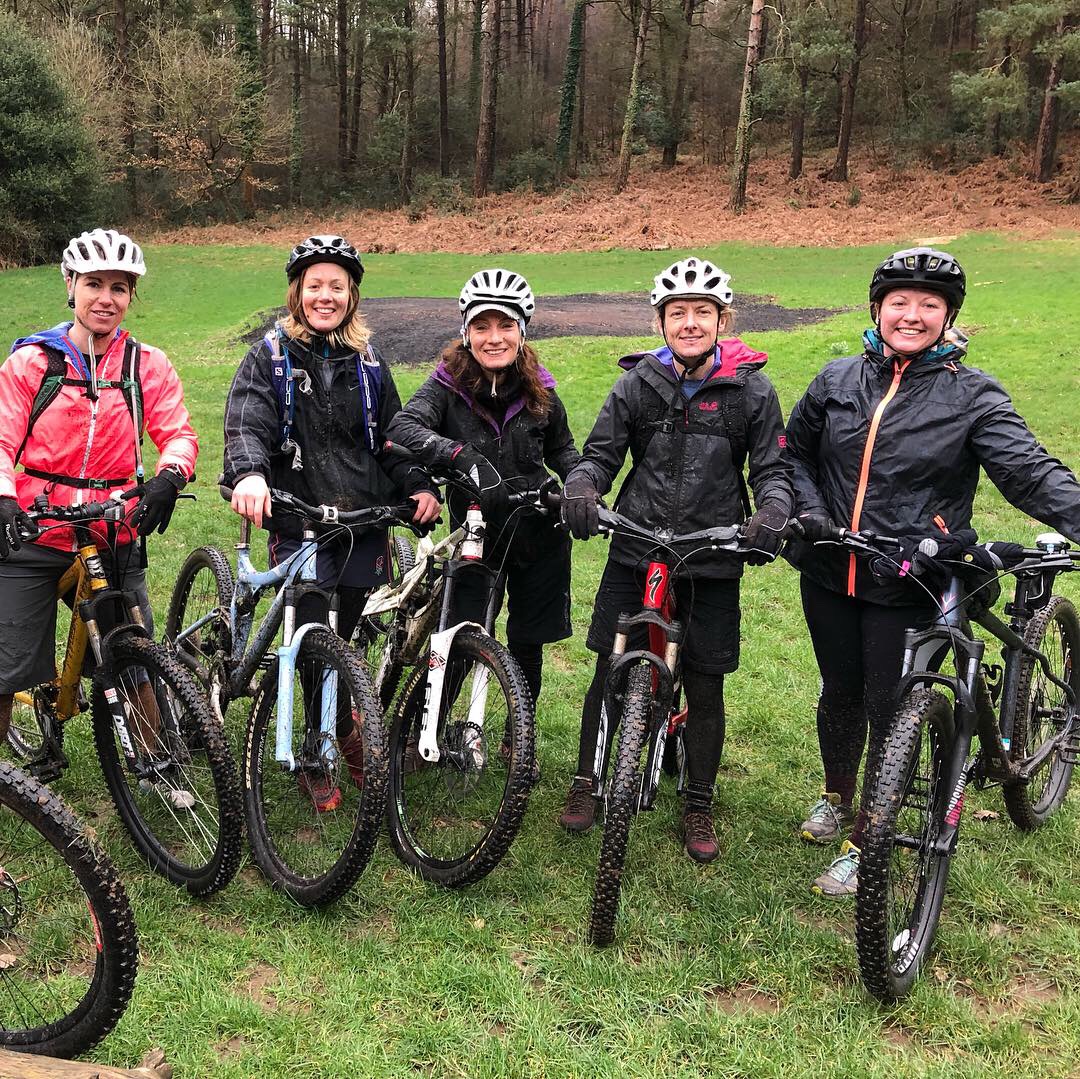
Although Skills in the Hills was principally developed around young riders, the methodology extended much further. Surrey Hills Adventure Company delivered mountain-bike coaching and riding experiences for:
- young people
- adults
- families
- schools
- holiday programmes
- small groups
- guided rides
- corporate and other organised groups
- young people with differing learning needs
The language, pace and level of challenge changed according to the rider. The underlying process did not:
- understand the participant
- establish the fundamentals
- choose appropriate terrain
- introduce manageable complexity
- allow the environment to create decisions
- coach understanding rather than dependence
- progress when competence supports it
This is an important connection to SHACADEMY’s present-day approach: the framework can remain consistent while delivery adapts to the people, place and activity.
Chapter eight
Knowing the environment
Effective progression depended on more than coaching qualifications or technical riding knowledge. It required detailed local knowledge.
Years of riding and coaching around Leith Hill and Holmbury Hill meant Skip could select different trails and sections according to the rider in front of him.
A particular piece of terrain might be appropriate for introducing descending. Another might expose weaknesses in braking. A section of singletrack could require better line choice. A more complex trail might combine several previously isolated skills and require the rider to process them together.
Knowing the environment allowed the coach to select the right problem at the right time. This was environmental knowledge being used as part of programme design.
Chapter nine
When the programme ended
After approximately four years, mountain-bike coaching became a smaller part of Surrey Hills Adventure Company’s work.
The organisation was growing rapidly in other areas including paddleboarding, woodland activity and subsequently open-water swimming and larger venue operations. There was only so much one person could continue to deliver personally.
Skills in the Hills therefore came to an end as the organisation developed in other directions.
But the methodology did not disappear.
The legacy
The riding stopped. The method travelled.
Several ideas developed through Skills in the Hills continued to appear throughout Surrey Hills Adventure Company’s later work:
- teach understanding rather than instruction alone
- build strong fundamentals
- progress competence gradually
- use real environments as part of learning
- allow people to make decisions
- retain appropriate challenge
- understand the environment before operating within it
- prepare people for what happens when things go wrong
- adapt delivery to the individual
- develop independence rather than dependence on the instructor
Today, SHACADEMY uses language including environmental literacy, dynamic decision-making, progressive competence, human factors and operational judgement. That terminology and the present-day framework came later.
The underlying ideas had already been tested on muddy trails in the Surrey Hills.
What Skills in the Hills established
Five transferable lessons
Technique without judgement is not competence
Being able to perform a skill does not automatically mean somebody knows when or why to use it.
Progression should add decisions, not just difficulty
More challenging terrain is useful when it introduces appropriate complexity at the right stage of development.
The environment can be part of the teaching system
A well-chosen real-world environment creates problems that artificial exercises cannot completely reproduce.
Good coaching should reduce dependence on the coach
The objective is progressively to enable participants to interpret situations and make appropriate decisions themselves.
Knowing the place matters
Local environmental knowledge allows a practitioner to match people, ability, conditions and terrain rather than delivering a standard programme regardless of context.
The bike was the activity. Decision-making was the real skill.
Skills in the Hills demonstrates an idea that continues through SHACADEMY’s work today: real competence is more than being able to perform a technique.
It is understanding the environment, recognising what is changing, knowing what options are available and making an appropriate decision at the right time for the right reasons.
Related case studies
Where the thinking went next
Related SHACADEMY areas
Where this experience applies
Coaching & Training
Real-world coaching built around competence, judgement and the individual.
Explore →Schools & Outdoor Education
Outdoor learning, managed challenge, environmental understanding and practical competence.
Explore →Workforce & Experiential Learning
Developing operational teams, instructors and coaches through practical, progressive competence.
Explore →Qualifications & Frameworks
Turning practical competence into defensible standards, progression and assessment.
Explore →Start a conversation
Developing people who can make good decisions?
Whether you are developing participants, instructors, coaches or operational teams, SHACADEMY helps turn technical skills into practical competence that works in real environments.