Venue & Destination Development Case Study
Birtley House — Replicating a Proven Outdoor Model
How an established woodland activity model was taken to a second Surrey estate, adapted around its lake and used to reach a new audience.
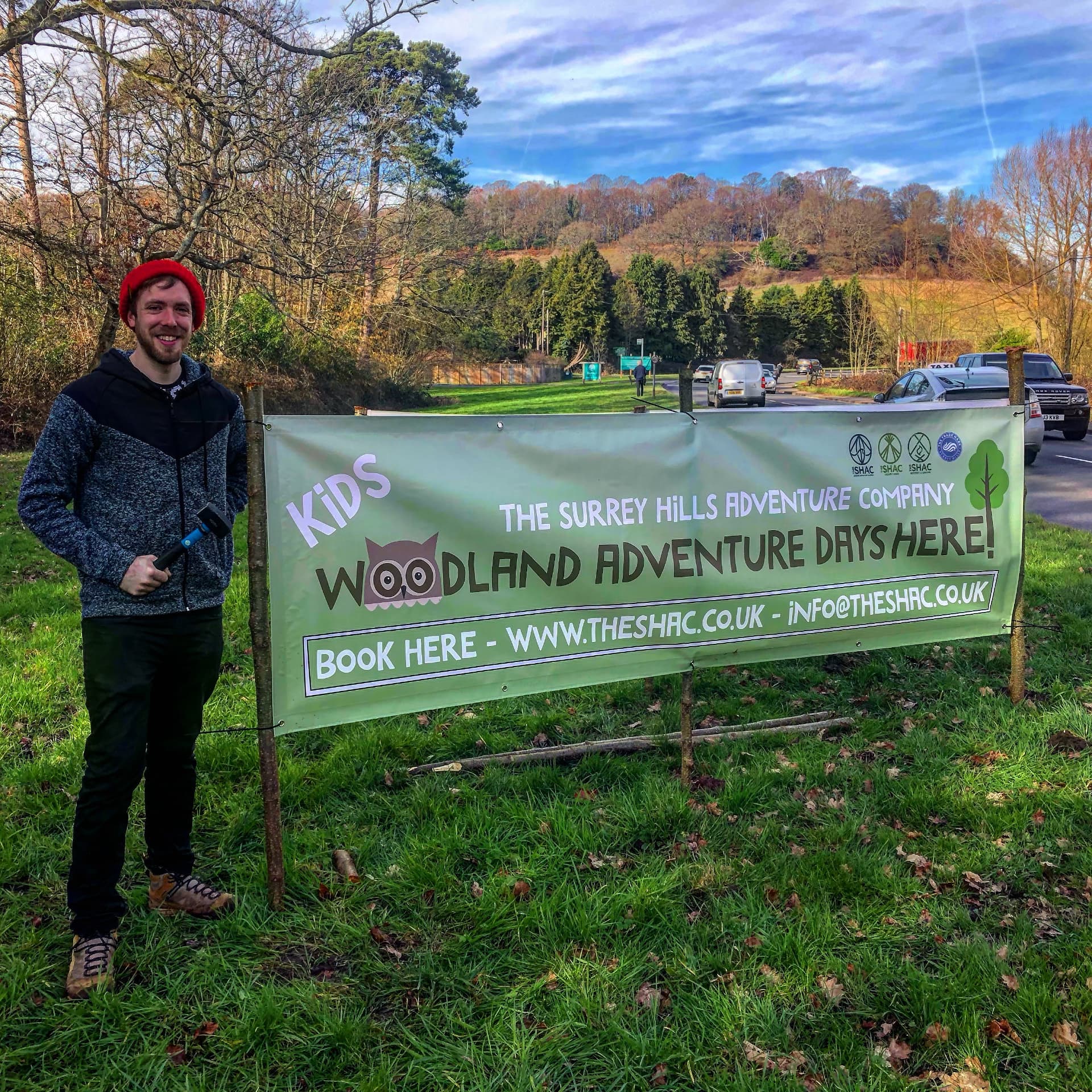
Birtley House is a private estate near Bramley in Surrey, with mature woodland and its own lake. In 2019 it became a new operating site for Surrey Hills Adventure Company (The SHAC), the outdoor activity business founded by Scott ‘Skip’ Innes.
The story here is not simply that an activity provider ran sessions at another venue. Birtley was a deliberate test of something more useful: whether a proven operating model, developed at Belmont School, could be reproduced on a second estate in a different part of Surrey — and then adapted around the natural assets that estate actually had.
The work described here was carried out by Surrey Hills Adventure Company. SHACADEMY is the present-day consultancy through which that operating experience is now applied.
At a glance
Place
Delivered by
Documented launch
How it started
Activity
Outcome
Relevance to SHACADEMY
Chapter one
How the opportunity developed
Skip and SHAC were involved with Surrey Hills Enterprises from its early period. Birtley House was part of the same network, and it was through that network that Skip met Simon at Birtley House.
From those early conversations the possibility of establishing outdoor activity on the estate developed gradually. The relationship pre-dates the operating site by some time; the documented launch of SHAC activity at Birtley is 2019, when the estate described the business as new to the site.
Contemporary SHAC advertising from the same period lists Belmont School, Birtley House and Buckland/Reigate as operating locations, and Birtley continued to appear as a SHAC location into 2020.
Opportunities of this kind rarely arrive as tenders. They emerge from networks, conversations and a landowner wondering what else their land could reasonably do.
Chapter two
From Belmont to Birtley
Belmont School was where SHAC developed its woodland adventure and Base Camp model: a working outdoor learning environment built around existing woodland, with the activity formats, staffing patterns and operating knowledge to run it.
The obvious growth question would have been: how do we make Belmont bigger?
Another route was available: take something that already works and reproduce it somewhere appropriate for a different audience. Birtley provided exactly that opportunity, and allowed SHAC to:
- establish activity in another part of Surrey
- reach another geographical audience within the Surrey Hills
- increase the overall reach and capacity of the operation
- reuse activity formats, knowledge and systems already developed
- adapt those formats to the characteristics of a different estate
This was not a franchise and it was not rigid replication. The sequence was simply: prove the model, find an appropriate place, adapt it, reach a new audience.
That evolution continued. The same thinking was adapted again at Buckland Park through Viking Camp, a woodland camp shaped around a different site and audience.
Chapter three
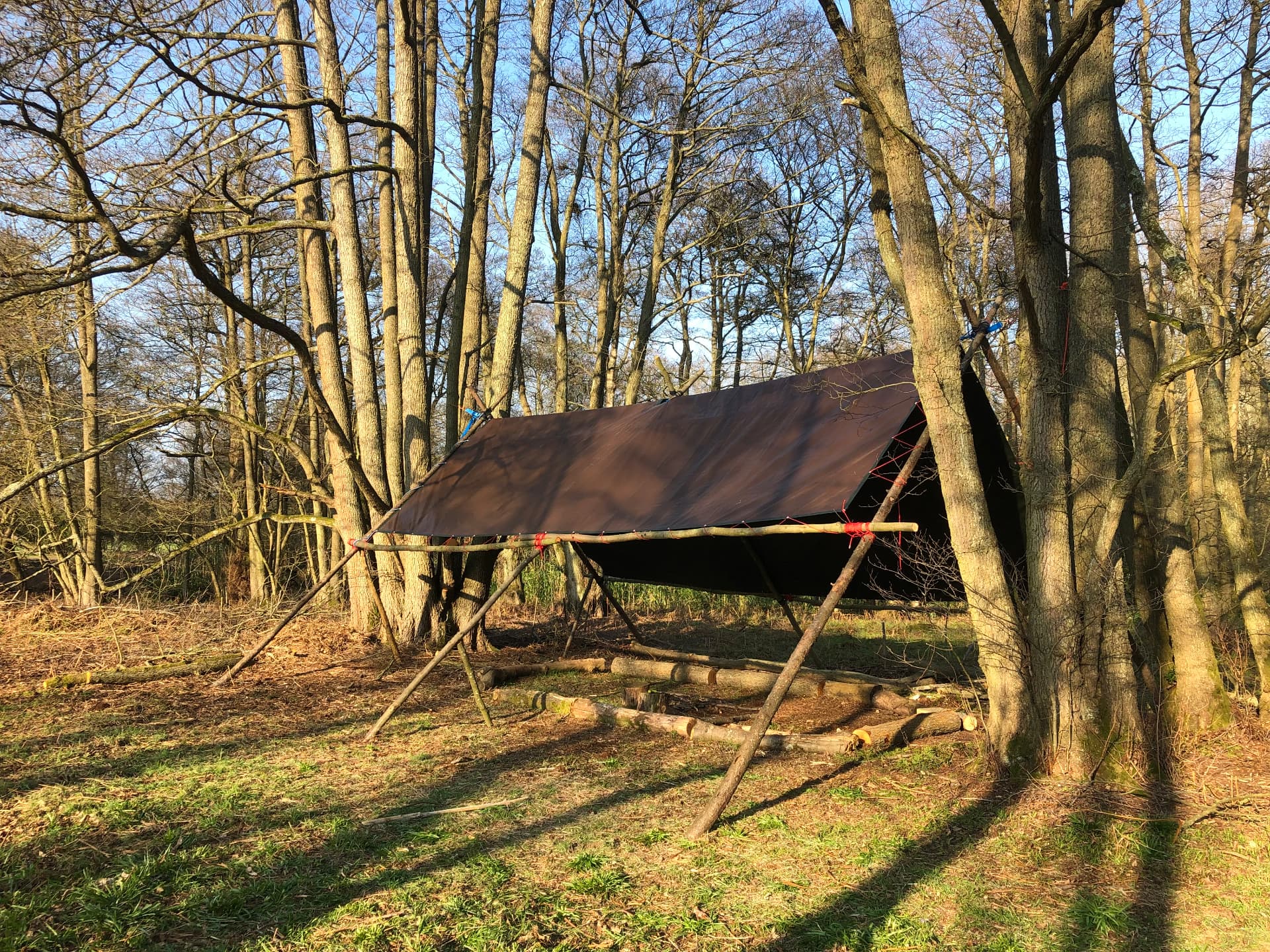
Birtley Woods and the woodland base
SHAC established a woodland operating area on the estate, referred to as Birtley Woods or the Birtley woodland base. The established Belmont-style proposition was reproduced there:
- children’s woodland adventure days and camps
- woodland skills
- outdoor learning and adventure activity
- parties
- group activity
- corporate activity
A Salomon event was also delivered at Birtley. Beyond the fact that it took place, the detail of that event is not currently documented within our records, and we have deliberately not reconstructed it here.
Archive footage
The woodland operation in practice
Chapter four
The lake expanded the model
Birtley was not Belmont. The most significant difference was water: the estate had its own lake.
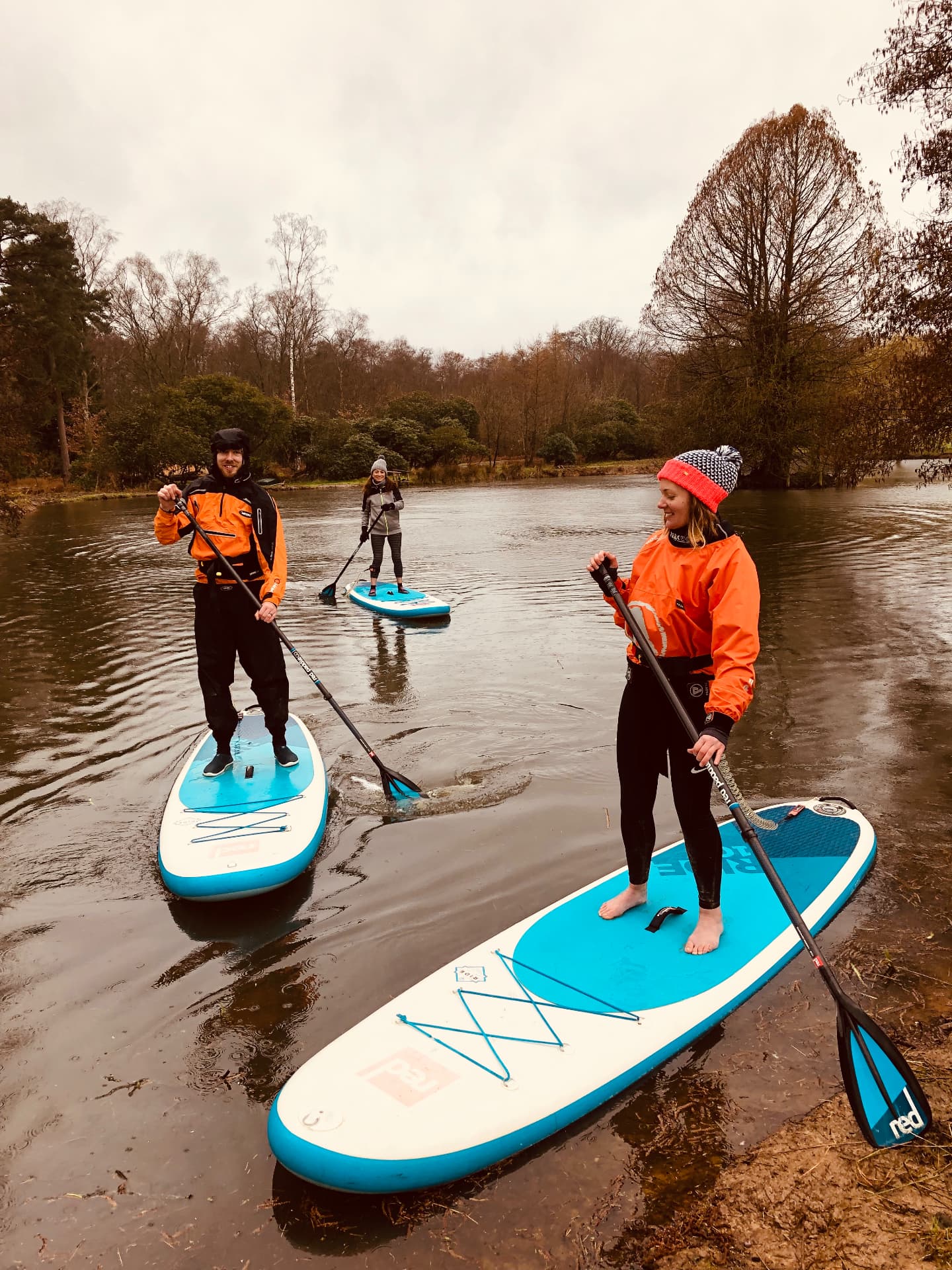
Rather than transplanting a fixed woodland programme, the question became what else this particular estate could support. The lake made a wider proposition possible, including:
- introductory paddleboarding
- stand-up paddleboard (SUP) sessions for adults and children
- SUP yoga
- water-based parties and group activity
Birtley’s own contemporary material independently referred to stand-up paddleboarding for adults and children on the estate lake — evidence that the water was a genuine part of the offer rather than an afterthought.
The lesson was not “copy Belmont”. It was: take what already works, understand the new place, and adapt the proposition around the assets available there.
Chapter five
Operating and safety systems
Using woodland — and particularly using water — required work that visitors never saw. Alongside the activity itself, SHAC developed and adapted:
- risk assessments for the site and its activities
- operating procedures for the woodland base and the lake
- water-safety arrangements appropriate to sheltered inland water
- activity planning and session structures
- practical delivery systems: staffing, equipment, briefings and group management
Activity development and operational development happened together. A new site does not simply inherit another venue’s paperwork; the systems have to describe the place they are actually used in.
Chapter six
Working with the estate
Birtley House was itself exploring broader use of its estate, woodland and natural assets. SHAC advised on what could practically be done with those assets, and then operated activity there.
That matters to SHACADEMY today because it demonstrates working with a landowner to identify viable activity, rather than arriving as an activity provider with a predetermined programme to install.
Birtley has subsequently continued to develop its woodland as a home for outdoor, creative, artisan and wellbeing activity. SHACADEMY makes no claim that those later ventures resulted from SHAC’s involvement, but their continued use demonstrates the wider potential of the natural assets the earlier Birtley operation was already exploring.
Chapter seven
COVID and consolidation
The Birtley operation continued into the COVID period, and COVID was a major factor in SHAC ceasing activity on the estate.
That decision belongs to a wider consolidation across the business rather than to any failure of the Birtley model. When operating conditions collapsed, effort concentrated on the largest site. We hold no reliable record of an exact closure date and have not invented one.
Why this matters now
Growth is not always a bigger venue
One of the most useful lessons from Birtley is that growth does not necessarily mean expanding one venue or building significant new infrastructure. Sometimes the opportunity is a sequence:
- prove a model
- identify an appropriate existing asset
- understand the place
- adapt the model
- build the operating systems
- reach a new audience
That thinking now informs SHACADEMY’s work on:
- venue and destination development
- estate and rural diversification
- outdoor operations
- water safety and operations
- identifying viable uses for existing natural assets
- replicating an established idea without ignoring the character of the new place
What Birtley demonstrated
Four transferable lessons
A proven model travels — if you let it change
The Belmont woodland proposition worked at Birtley because it was adapted to the estate, not because it was copied onto it.
Natural assets beat new infrastructure
Existing woodland and an existing lake carried the entire proposition. No significant build was required to open a viable operation.
Systems are part of the product
Risk assessment, water-safety arrangements and operating procedures were developed alongside the activity, not bolted on afterwards.
New places reach new people
A second Surrey site extended the operation's reach geographically without stretching a single venue beyond what it could sensibly hold.
Related case studies & expertise
Where the model came from and went next
Belmont School
Where the woodland Base Camp model was developed — and the venue partnership approach that made it viable.
Read case study →Venue & Destination Development
Identifying viable activity on existing land, and the commercial and operating models that support it.
Explore →Water Safety & Operations
Planning and running water-based activity safely on inland water, from procedures to practical delivery.
Explore →Start a conversation
Have you got woodland, water or land that could do more?
Most estates do not need new infrastructure to support outdoor activity. They need an honest read of what the place can genuinely support, and the operating systems to run it responsibly.