Water safety resource
Your friend is in trouble in the water.Should you go in?
Somebody you know is struggling in the water. Your instinct says get in. That instinct is completely human — and it is also how people trying to help end up in difficulty themselves. Here is what to think about, and what the recognised national guidance actually says.
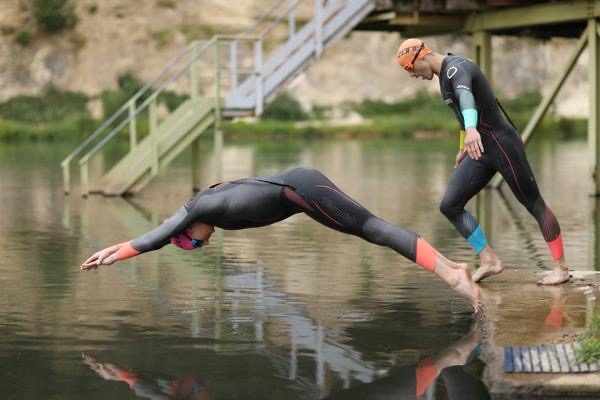
The instinct is normal. It is still worth questioning.
Nobody stands and watches somebody they care about struggle. The pull to get in is immediate and it is not stupidity — it is the most natural reaction there is.
The problem is that the water does not treat you differently because your reason for entering it is a good one. Whatever made it difficult for the first person is still there when you get in: the cold, the depth, the distance, the conditions, the exit you cannot see.
That is how one person in difficulty becomes two. It is worth deciding now, calmly, on dry land, what you would actually do — rather than deciding it in the moment.
What the recognised national guidance says
SHACADEMY does not write its own emergency slogan, and you should be wary of anybody who does. In the UK there is a nationally coordinated message for exactly this situation, developed by the National Water Safety Forum with its partners and the public, and shared under the Respect The Water banner.
If you see someone in trouble in the water:
- 1Phone 999 to get help
- 2Tell them to stay calm and float on their back
- 3Throw rescue equipment to help them float until emergency services arrive
Phone Float Throw — National Water Safety Forum, Respect The Water bystander rescue campaign.
This is the national guidance, quoted as published. SHACADEMY did not develop it and does not claim it. Learn it from the source, and follow it rather than any wording of ours.
Where SHACADEMY’s part starts
Recognised guidance tells you what to do. What we work on is everything around it: the judgement, the awareness, and the honest question of whether you are able to help in a way that does not add a second casualty.
Our framework starts with Self for that exact reason. Looking after yourself first is not selfishness. It is the only version of helping that reliably works, because a helper in difficulty needs rescuing too.
- Know where the nearest phone signal, road access and public rescue equipment are — before anything goes wrong.
- Shout, point and direct. Getting other people involved and getting the emergency services moving early is doing something.
- Reach and throw rather than enter, wherever that is possible.
- Keep talking to the person in the water. Calm, clear instruction is worth a great deal.
- Stay somewhere you can be found and described. Emergency services need a location.
The part almost nobody talks about: prevention
Most of this conversation happens too late. The decisions that matter most were made earlier: where you got in, who was with you, what the conditions were doing, whether anybody knew where you were, whether there was any equipment nearby, and whether anybody had looked at the water properly before anybody entered it.
Prevention is usually better than reaction. That is not a slogan to make people nervous of water — we are firmly in favour of people getting outdoors and using it. It just means the best version of this page is the one you never need.
This resource is about thinking, not training. It does not teach rescue technique, casualty care or first aid. If you want those, train properly with a recognised provider.
Sources
Recognised national guidance is quoted as published and attributed. It is not SHACADEMY’s work and we do not claim it. Where thinking, judgement or the frameworks are ours, we say so.
If this is useful to somebody you know, send it to them.
Where to go next
Learn to read the water
Water is not one environment. A short, practical habit for looking at the water actually in front of you — using the SHACADEMY WATER Safety Framework.
The thinking behind it
The SHACADEMY Way™ and the SHACADEMY WATER Safety Framework™, in full and free to use.